

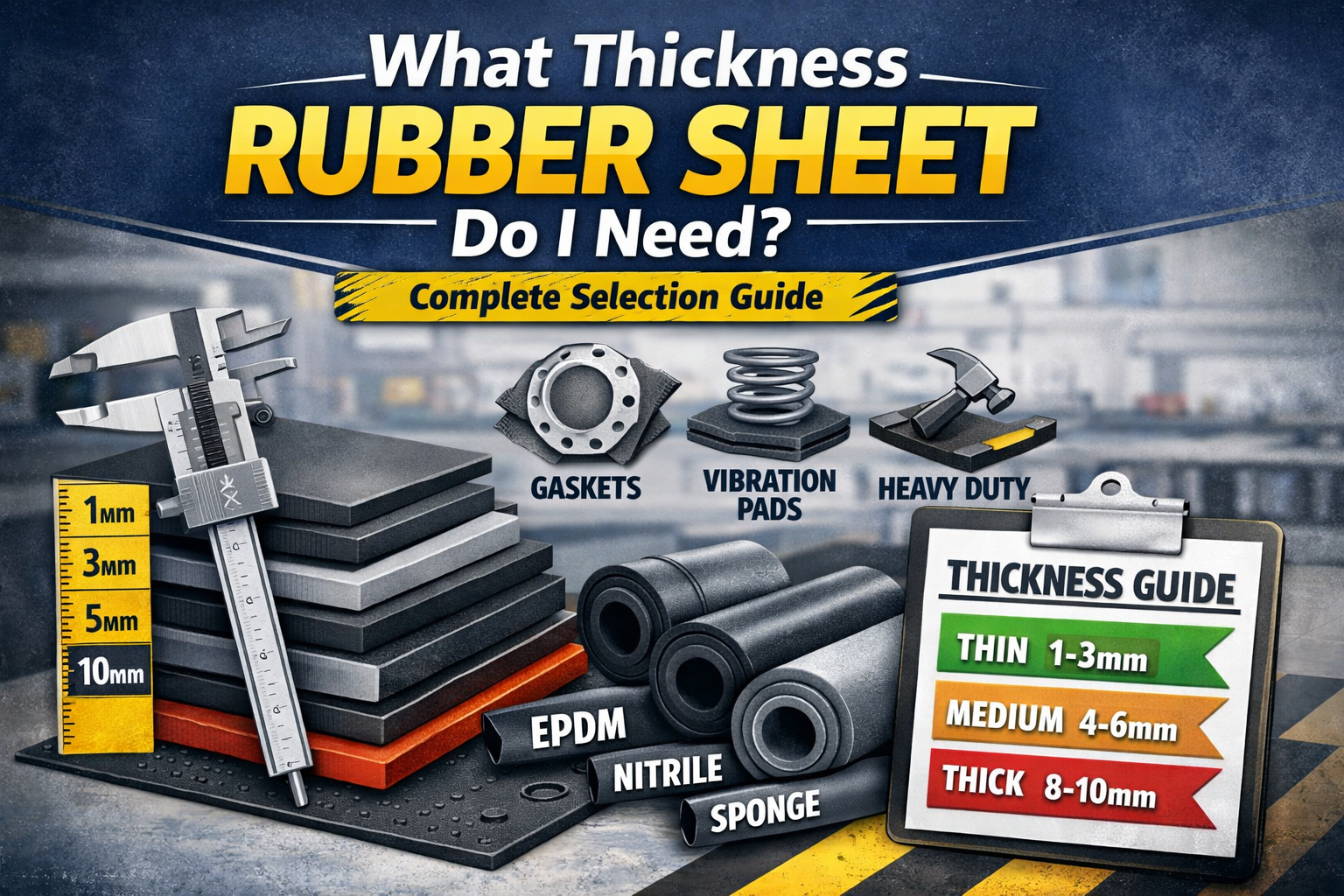
Choosing the correct rubber sheet thickness is essential for sealing, gasketing, vibration control and protection applications. Using material that is too thin can lead to leaks or premature wear, while material that is too thick may not compress correctly or may be difficult to install.
In this guide, we explain how to choose the correct rubber sheet thickness depending on the application, material type and environment. If you are unsure which rubber to use overall, see our full material guide here:
https://www.adsupply.co.uk/rubber-material-guide/
Understanding the correct rubber sheet thickness will help ensure long-term performance and prevent failure in industrial, construction and marine applications. If you are selecting materials as well as thickness, see our complete guide to rubber sheet, sponge rubber & foam materials for a full comparison.
Why Rubber Sheet Thickness Matters
Rubber sheet is available in many thicknesses, typically ranging from 1mm up to 25mm or more. The correct thickness depends on how the material will be used.
Thickness affects:
-
Compression ability
-
Sealing performance
-
Strength and durability
-
Flexibility
-
Resistance to vibration
-
Ability to fill gaps
For example, a gasket may require a thinner material to compress tightly, while vibration isolation may require a thicker rubber sheet to absorb movement. If your application involves sealing, our best rubber for gaskets guide explains which materials perform best under compression.
Rubber compounds also behave differently depending on thickness, which is why material selection and thickness should always be considered together.
For a full comparison of materials, see:
https://www.adsupply.co.uk/rubber-sheet-guide/
Common Rubber Sheet Thicknesses and Their Uses
Below is a general guide to the most common rubber sheet thickness sizes and where they are typically used.
| Thickness | Typical Uses |
|---|---|
| 1mm | Light sealing, small gaskets |
| 2mm | General sealing, light protection |
| 3mm | Gaskets, waterproof seals |
| 5mm | Heavy sealing, vibration pads |
| 6–10mm | Impact protection, isolation |
| 12mm+ | Anti-vibration, heavy duty pads |
Choosing the correct rubber sheet thickness depends on the amount of compression required and the size of the gap being sealed.
Choosing Thickness for Gaskets and Seals
For gasket applications, thinner rubber sheet is usually better because the material must compress evenly to create a tight seal.
Typical gasket thickness:
-
1mm rubber sheet
-
2mm rubber sheet
-
3mm rubber sheet
Common materials used for gaskets include:
-
EPDM rubber sheet. For a detailed comparison, see our EPDM vs neoprene sponge rubber guide to understand which material is best for sealing applications.
-
Neoprene rubber sheet
-
Nitrile rubber sheet
-
SBR rubber sheet
Browse available rubber sheet materials here:
https://www.adsupply.co.uk/product-category/rubber-sheet/
If the gasket needs oil resistance, nitrile rubber may be the best option. If the gasket will be outdoors, EPDM is usually recommended. For gasket applications, thinner rubber sheet is normally used so the material can compress correctly and create a tight seal. If you require precision cut parts, we also supply custom gaskets manufactured to your required size and thickness.
External reference on rubber properties:
https://www.elastoproxy.com/material-properties-rubber-compounds/
Choosing Thickness for Waterproof Sealing
When sealing doors, panels, roofs or enclosures, thicker rubber sheet may be required to allow compression.
Typical sealing thickness:
-
3mm rubber sheet
-
5mm rubber sheet
-
6mm rubber sheet
For outdoor sealing, EPDM rubber is often used because it resists UV, ozone and weather.
See EPDM sponge guide:
https://www.adsupply.co.uk/what-is-epdm-foam-sponge-buying-guide/
Sponge rubber may be better than solid rubber when a compressible seal is required.
See:
https://www.adsupply.co.uk/neoprene-sponge-cord-guide/
Choosing Thickness for Vibration Isolation
When rubber is used to reduce vibration, thicker material is normally required to absorb movement.
Typical thickness for vibration control:
-
5mm rubber sheet
-
6mm rubber sheet
-
10mm rubber sheet
-
12mm rubber sheet
Thicker rubber provides better shock absorption but may reduce stability if too soft.
Neoprene and SBR rubber are commonly used for vibration pads.
Choosing Thickness for Protection and Cushioning
For protection, packing or transport applications, foam or sponge materials may be more suitable than solid rubber.
Polyethylene foam and sponge rubber are often used where cushioning is required.
See:
https://www.adsupply.co.uk/closed-cell-polyethylene-foam-buying-guide/
https://www.adsupply.co.uk/closed-cell-pe-foam-vs-epdm-foam/
These materials are lighter and compress more easily than solid rubber sheet.
When to Use Sponge Rubber Instead of Solid Rubber
If the material needs to compress to seal a gap, sponge rubber is often a better choice than solid rubber sheet.
Use sponge rubber when:
-
sealing doors or panels
-
waterproof joints
-
vibration isolation
-
uneven surfaces
-
acoustic sealing
Solid rubber is better when strength and wear resistance are required.
For bonding rubber materials, see:
https://www.adsupply.co.uk/which-adhesive-for-rubber-bonding/
Quick Guide – What Rubber Sheet Thickness Should I Use?
| Application | Recommended Thickness |
|---|---|
| Small gasket | 1–2mm |
| General gasket | 2–3mm |
| Waterproof seal | 3–5mm |
| Heavy seal | 5–6mm |
| Vibration pad | 6–10mm |
| Protection pad | 10mm+ |
| Cushioning | Sponge / foam |
Choosing the correct rubber sheet thickness will help ensure the material performs correctly and lasts longer.
Conclusion
Selecting the correct rubber sheet thickness is just as important as choosing the right material. Thin rubber is best for gaskets and tight seals, while thicker rubber is required for vibration control, protection and heavy-duty applications. If vibration control is your main concern, our best rubber for vibration pads guide explains which materials and thicknesses perform best.
If you are unsure which material or thickness to choose, see our full rubber material guide for a complete comparison of EPDM, neoprene, nitrile, sponge rubber and polyethylene foam.
FAQ
What thickness rubber sheet should I use?
The correct rubber sheet thickness depends on the application. Thin rubber (1–3mm) is usually used for gaskets and sealing, while thicker rubber (5–10mm or more) is used for vibration isolation, protection and heavy-duty applications. Choosing the correct rubber sheet thickness ensures proper compression and long-term performance.
Is thicker rubber sheet always better?
No, thicker rubber sheet is not always better. If the material is too thick, it may not compress correctly and could prevent a proper seal. For gasket applications, thinner rubber sheet is usually more suitable, while thicker rubber is better for cushioning or vibration control. For more information regarding the best rubbers for gaskets please read our guide ‘best rubber for gaskets – EPDM vs Neoprene vs Nitrile vs SBR’
What thickness rubber sheet is best for gaskets?
Most gaskets use rubber sheet between 1mm and 3mm thick. This allows the material to compress evenly and create a tight seal. The correct material should also be chosen depending on the environment, for example EPDM for outdoor use or nitrile for oil resistance.
What thickness rubber sheet should I use for vibration pads?
For vibration isolation, thicker rubber is normally required. Common sizes include 5mm, 6mm and 10mm rubber sheet. Thicker material absorbs more movement but should not be so soft that it becomes unstable.
Should I use sponge rubber instead of solid rubber?
Sponge rubber is better when the material needs to compress to form a seal. Solid rubber sheet is stronger and more durable, but sponge rubber is often used for waterproof sealing, acoustic sealing and uneven surfaces.
Where can I buy rubber sheet in different thicknesses?
Rubber sheet is available in a range of materials including EPDM, neoprene, nitrile and SBR, as well as sponge rubber and polyethylene foam. Different thicknesses are used depending on sealing, gasketing or protection requirements.
Browse rubber sheet here:
https://www.adsupply.co.uk/product-category/rubber-sheet/