

Choosing the best rubber for gaskets is essential for achieving reliable sealing, long service life and resistance to environmental conditions. Different rubber materials behave very differently depending on temperature, oil exposure, weathering and compression, so selecting the wrong material can lead to leaks, failure or premature wear in industrial, automotive or construction applications. Rubber can be tricky to bond depending on the grade, so we’ve explained everything in our best glue for rubber article.
In this guide we compare the most common gasket materials including EPDM, Neoprene, Nitrile (NBR), SBR, sponge rubber and polyethylene foam, and explain how to choose the best rubber for gaskets depending on the environment and type of seal required.
To explore more about the different rubbers, read our complete guide here
For a technical overview of rubber materials, see this reference:
https://en.wikipedia.org/wiki/Synthetic_rubber
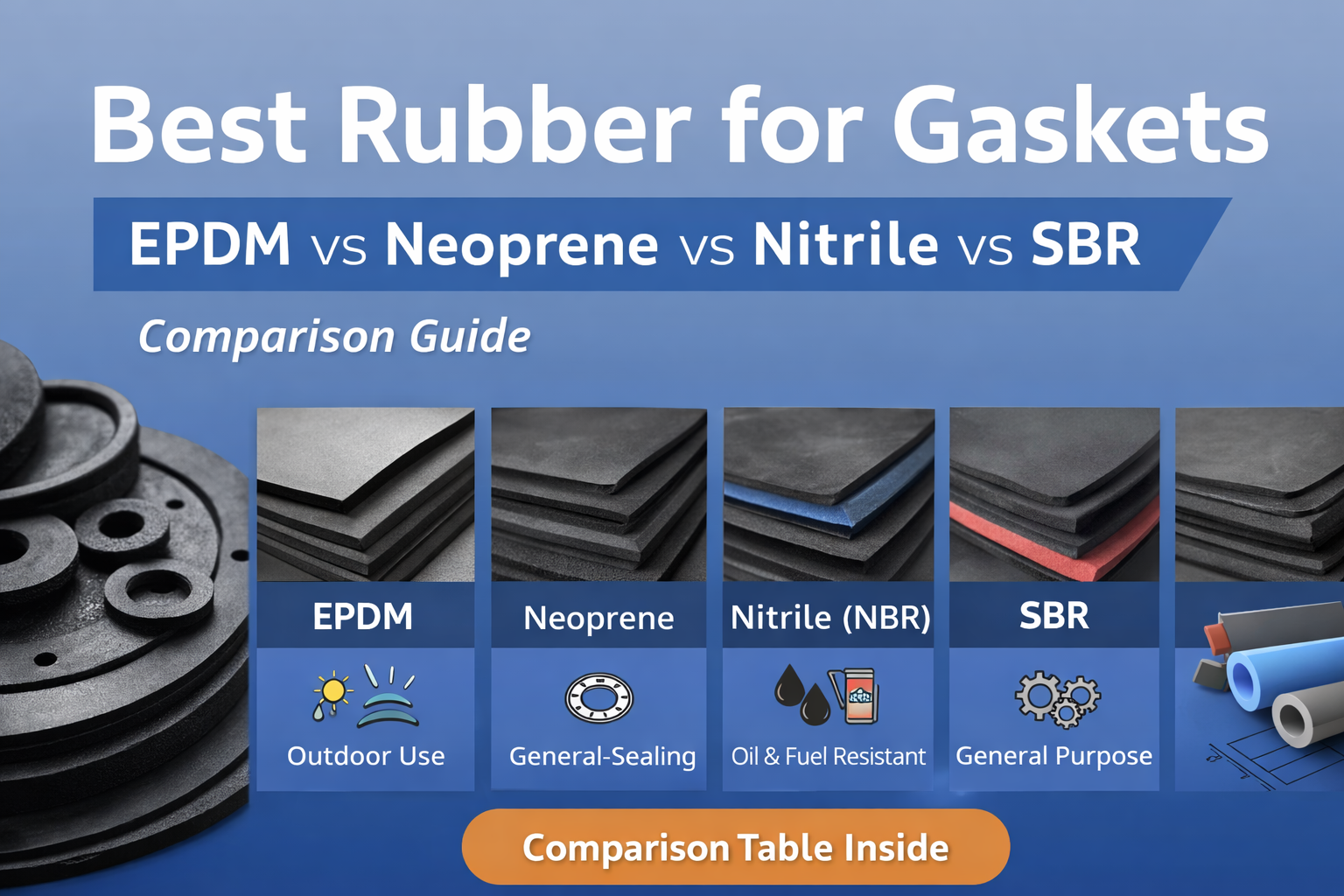
What Makes the Best Rubber for Gaskets?
The best rubber for gaskets depends on the conditions the gasket will be exposed to. A good gasket material should offer:
-
Good compression set resistance
-
Flexibility without cracking
-
Resistance to oil, water or chemicals
-
Suitable temperature range
-
Long-term durability
-
Reliable sealing under pressure
Some applications require solid rubber sheet for strength, while others require sponge or foam materials that compress easily to form a seal.
Choosing the correct material is especially important in industrial sealing, where poor gasket performance can lead to leaks, equipment damage or safety issues.
EPDM Rubber for Gaskets
EPDM rubber is widely used for outdoor sealing and weather-resistant gasket applications. It offers excellent resistance to UV, ozone, water and steam, making it one of the best rubber for gaskets used in construction, roofing and HVAC systems.
EPDM is known for:
-
Excellent weather resistance
-
Good flexibility
-
Good compression resistance
-
Long service life outdoors
Typical EPDM gasket applications include:
-
roofing systems
-
glazing seals
-
HVAC units
-
external enclosures
-
waterproof joints
- Anti vibration pads
EPDM should not normally be used where oil or fuel exposure is present, as petroleum products can damage the material.
Neoprene Rubber for Gaskets
Neoprene rubber is a versatile material often used where a balance of strength, flexibility and environmental resistance is required. It performs well in many industrial conditions and is commonly considered the best rubber for gaskets when a general-purpose material is needed.
Neoprene provides:
-
Moderate oil resistance
-
Good weather resistance
-
Good mechanical strength
-
Good compression performance
Typical neoprene gasket uses include:
-
machinery seals
-
marine equipment
-
industrial enclosures
-
vibration isolation pads
-
panel gaskets
Neoprene is often chosen when both durability and flexibility are required without the higher cost of specialist rubbers. For round sealing applications, neoprene sponge cord is often used instead of flat sheet, as it compresses easily to form an airtight and watertight seal.
You can view our full range of neoprene sponge cord here →
Neoprene Sponge Cord – Closed Cell Rubber Sealing Cord
Nitrile Rubber (NBR) for Gaskets
Nitrile rubber is the preferred material where oil, fuel or grease resistance is required. Because of its chemical resistance, nitrile is often the best rubber for gaskets used in automotive, hydraulic and engineering applications.
Nitrile offers:
-
Excellent oil resistance
-
Good fuel resistance
-
Strong mechanical properties
-
Reliable sealing performance
Typical nitrile gasket applications include:
-
fuel systems
-
oil seals
-
hydraulic equipment
-
pumps and compressors
-
engine components
Nitrile is not as weather resistant as EPDM but is much better suited to oily environments.
SBR Rubber for Gaskets
SBR (Styrene-Butadiene Rubber) is a cost-effective general-purpose rubber commonly used where specialist resistance is not required. In many low-stress applications, SBR can be the best rubber for gaskets due to its good strength and low cost.
SBR provides:
-
Good durability
-
Good abrasion resistance
-
Good flexibility
-
Lower cost than EPDM or Nitrile
Typical SBR gasket uses:
-
general machinery
-
workshop equipment
-
low pressure seals
-
flooring and padding
-
indoor sealing applications
SBR is not recommended for oil exposure or long-term outdoor use.
Solid Rubber vs Sponge Rubber for Gaskets
Not all gaskets should be made from solid rubber sheet. In many cases sponge or foam rubber provides better sealing because it compresses more easily.
Solid rubber is used where:
-
high pressure sealing is required
-
strength is needed
-
wear resistance is important
-
the gasket must hold its shape
Sponge rubber is used where:
-
compression sealing is needed
-
surfaces are uneven
-
vibration must be absorbed
-
a soft seal is required
Closed cell sponge rubber is commonly used for:
-
enclosure gaskets
-
weather seals
-
acoustic sealing
-
panel sealing
-
door seals
Polyethylene Foam for Gaskets
Polyethylene foam is often used for lightweight sealing and cushioning applications. It has a closed-cell structure which prevents water absorption and allows the material to compress easily.
PE foam offers:
-
good cushioning
-
water resistance
-
low weight
-
thermal insulation
-
good compression recovery
Polyethylene foam can be the best rubber for gaskets where a soft compressible seal is required rather than a structural gasket.
Typical uses include:
-
packaging seals
-
insulation gaskets
-
acoustic panels
-
light duty sealing
-
protective pads
Browse polyethylene foam sheets
Polyethylene is a low surface energy material, if you need help bonding PE or PP you can read our guide strongest glue for plastic which covers how to bond low-medium surface energy substrates.
Rubber Gasket Material Comparison
| Material | Oil Resistance | Weather Resistance | Compression Performance | Cost | Typical Use |
|---|---|---|---|---|---|
| EPDM | Poor | Excellent | Good | Medium | Outdoor sealing, HVAC, roofing |
| Neoprene | Moderate | Good | Good | Medium | General industrial gaskets |
| Nitrile (NBR) | Excellent | Moderate | Good | Higher | Oil & fuel systems, automotive |
| SBR | Poor | Poor | Good | Low | General purpose gaskets |
| Sponge Rubber | Low | Good | Excellent | Medium | Compression seals, enclosures |
| Polyethylene Foam | Low | Moderate | Soft / High compression | Low | Light sealing, insulation |
Closed Cell PE Foam vs EPDM Foam: Properties, Uses & Selection Guide
Complete Guide to Rubber Sheet, Sponge Rubber & Foam Materials
Choosing the Best Rubber for Gaskets
The best rubber for gaskets always depends on the application:
-
Use EPDM for outdoor and weather exposure
-
Use Neoprene for general industrial sealing
-
Use Nitrile for oil and fuel resistance
-
Use SBR for low-cost general gaskets
-
Use sponge rubber for compression seals
-
Use polyethylene foam for lightweight sealing
If you are unsure which material is suitable, our team can help you choose the correct rubber sheet, sponge or foam for your application. If you need help deciding the best thickness sheet required you can read our article here for advice on the different thickness and their applications. For more information visit our technical hub for articles on rubber, structural adhesives and sealants.
For custom made gaskets click here