

What’s the Difference Between EPDM and Neoprene Sponge Rubber?
Choosing between EPDM vs neoprene sponge rubber can be confusing, especially as both materials look similar and are commonly used for sealing, gasketing, insulation and weatherproofing. However, their performance differs significantly depending on temperature, weather exposure, oils, compression and environment. If your application also involves bonding rubber to other materials, see our guide on best adhesive for rubber to metal for recommended adhesive systems.
In this guide we explain the differences between EPDM and neoprene sponge rubber, when to use each material, and when you should use solid rubber instead of sponge. If you are unsure which rubber type you need, this article will help you choose the correct material for long-lasting performance.
If you are new to rubber materials, you may also want to read our
Complete Guide to Rubber Sheet, Sponge Rubber & Foam Materials which explains the differences between rubber sheet, sponge rubber and foam in more detail.
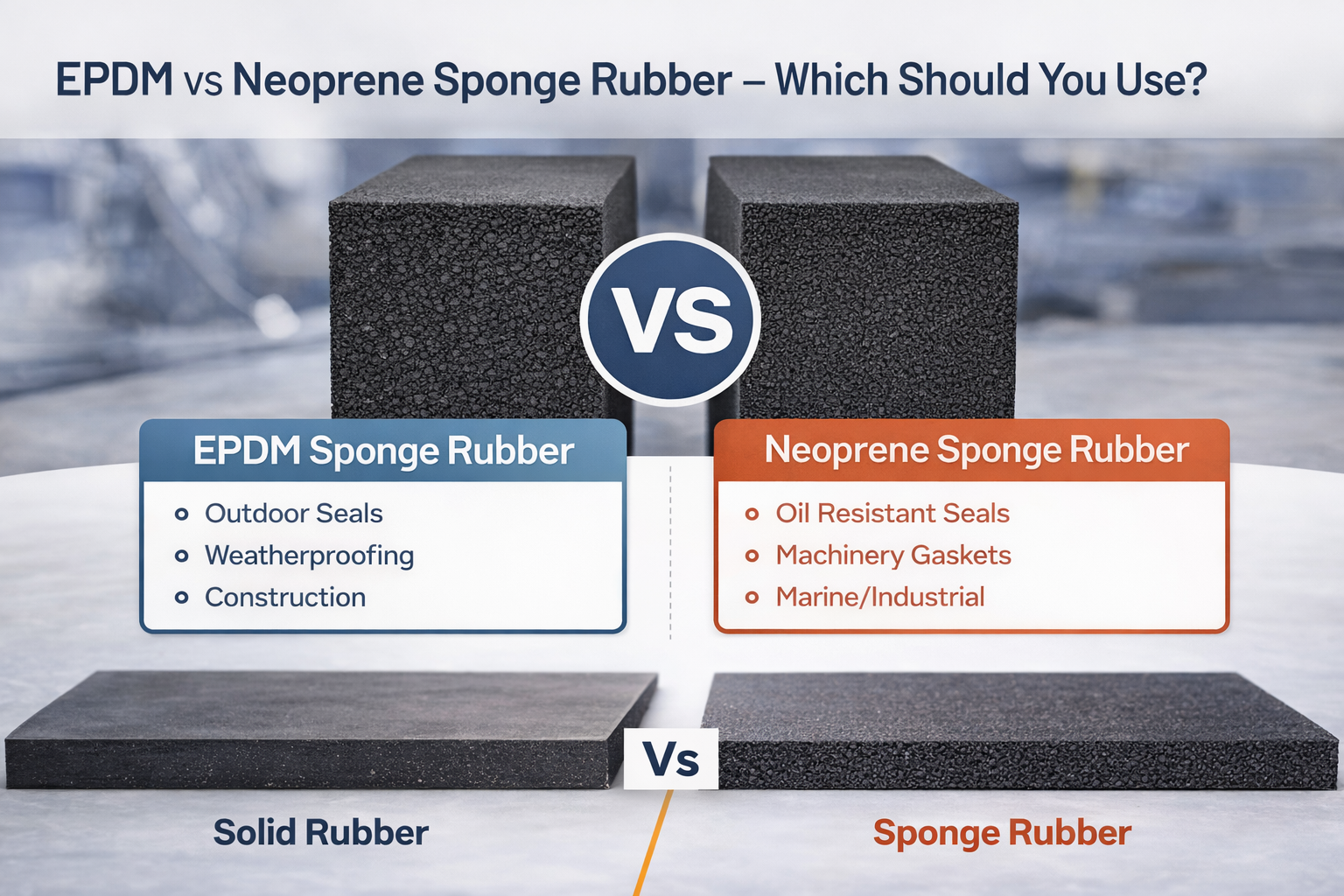
What Is Sponge Rubber?
Sponge rubber is a closed-cell rubber material that contains small air pockets, allowing it to compress easily and create a tight seal. This makes it ideal for applications where flexibility, cushioning or weatherproof sealing is required.
Common uses for sponge rubber include:
-
Door seals and gaskets
-
HVAC sealing
-
Enclosures and cabinets
-
Automotive seals
-
Marine sealing
-
Vibration isolation
-
Waterproof joints
Unlike solid rubber, sponge rubber compresses under pressure, making it suitable where a tight seal is needed without excessive force. When comparing EPDM vs neoprene sponge rubber, the correct choice usually depends on whether the application requires better weather resistance or improved resistance to oils and industrial fluids. If you’re unsure how sponge compares to solid materials, read our rubber sheet buying guide to understand the key differences.
You can view our full range here:
https://www.adsupply.co.uk/rubber-materials-sheets/sponge-foam-rubber/
EPDM Sponge Rubber – Properties & Uses
EPDM sponge rubber is one of the most widely used sealing materials because it offers excellent resistance to weather, water and temperature.
Key properties of EPDM sponge:
-
Excellent UV and ozone resistance
-
Waterproof and weatherproof
-
Good flexibility at low temperatures
-
Suitable for outdoor use
-
Good compression recovery
-
Temperature range approx. -40°C to +120°C (higher grades available)
Typical applications:
-
External seals
-
Roofing and construction joints
-
HVAC systems
-
Enclosures and cabinets
-
Automotive weather seals
-
Marine sealing
EPDM is especially popular for outdoor environments where sunlight, rain or temperature changes would quickly damage other rubbers. For applications involving bonding EPDM, see our best adhesive for EPDM rubber guide for the most effective solutions.
You can buy EPDM sponge here:
https://www.adsupply.co.uk/rubber-materials-sheets/epdm-sponge/
For more detail, see our guide:
What Is EPDM Foam Sponge? Properties, Uses & How to Choose
Neoprene Sponge Rubber – Properties & Uses
Neoprene sponge rubber is slightly more versatile than EPDM, especially when resistance to oils, fuels or chemicals is required.
Key properties of neoprene sponge:
-
Good resistance to oil and grease
-
Good weather resistance
-
Good mechanical strength
-
Good compression and sealing performance
-
Better flame resistance than EPDM
-
Temperature range approx. -30°C to +100°C
Typical applications:
-
Automotive seals
-
Marine environments
-
Industrial gaskets
-
Machinery sealing
-
Electrical enclosures
-
Oil-resistant seals
Neoprene is often chosen when the seal may be exposed to oils, fuels or mild chemicals, where EPDM would not perform as well.
You can view neoprene sponge here:
https://www.adsupply.co.uk/rubber-materials-sheets/epdm-sponge/
You may also find this helpful:
What Is Neoprene Sponge Cord? Uses, Properties & Buying Guide
EPDM vs Neoprene Sponge Rubber – Quick Comparison
| Property | EPDM Sponge | Neoprene Sponge |
|---|---|---|
| Weather resistance | Excellent | Good |
| UV resistance | Excellent | Good |
| Oil resistance | Poor | Good |
| Water resistance | Excellent | Very good |
| Temperature resistance | Very good | Good |
| Outdoor use | Best choice | Good |
| Industrial/oil environments | Not ideal | Better choice |
In general:
-
Use EPDM for outdoor, waterproof or weatherproof sealing
-
Use neoprene for oil, fuel or industrial environments
If you need help choosing, our guide best rubber for gaskets explains how different rubber materials perform in sealing applications. Need to bond EPDM, neoprene or nitrile? See our expert guide covering the best glue for rubber for each material type.
When Should You Use Solid Rubber Instead of Sponge?
One of the most common mistakes is choosing sponge rubber when solid rubber sheet would be more suitable. For a full breakdown of rubber materials, see our complete guide to rubber sheet, sponge rubber & foam materials.
Sponge rubber should be used when:
-
You need compression to create a seal
-
Surfaces are uneven
-
You need cushioning or vibration control
-
Low clamping force is available
-
A watertight seal is required
Solid rubber should be used when:
-
High strength is required
-
The material must support weight
-
The rubber will be bolted tightly
-
Abrasion resistance is needed
-
Structural stability is important
For example:
Use sponge rubber for:
-
Door seals
-
Gaskets
-
Enclosure sealing
-
Weatherproof joints
Use solid rubber for:
-
Machinery mounts
-
Wear strips
-
Impact protection
-
Structural gaskets
-
Heavy duty sealing
You can read more here:
What Thickness Rubber Sheet Do I Need? Complete Selection Guide
How to Choose the Right Sponge Rubber
When selecting EPDM or neoprene sponge, consider:
-
Temperature range
-
Exposure to oil or fuel
-
Indoor or outdoor use
-
Required compression
-
Thickness needed
-
Adhesive backing required
If the material will be exposed to sunlight or weather, EPDM is usually the safest choice. If the material may contact oil or machinery, neoprene is often better. For general industrial sealing, both materials perform well when chosen correctly. If your application involves vibration control, our best rubber for vibration pads guide explains which materials perform best.
For additional technical information about rubber materials, you can also refer to the British Plastics Federation rubber material guide which explains how different rubber types behave in industrial applications.
Need Help Choosing EPDM or Neoprene Sponge?
If you are unsure which material you need, we can help you select the correct rubber for your application.
We supply:
-
EPDM sponge rubber sheets
-
Neoprene sponge rubber sheets
-
Solid rubber sheet
-
Adhesive backed rubber
-
Rubber cord and strip
-
Custom cut gaskets
View the full range here:
https://www.adsupply.co.uk/rubber-materials-sheets/
Or contact us for advice before ordering.
Understanding the differences between EPDM vs neoprene sponge rubber will help you choose the correct material for sealing, gasketing and industrial applications, ensuring the best performance and longest service life.
For more technical advice, explore our adhesive advice & technical guides covering bonding, sealing and material selection.