
How to bond nylon to metal: Bonding nylon to metal is more demanding than bonding two metal parts. A general-purpose glue may feel secure at first, then peel away under load or moisture. The best adhesive depends on the nylon grade, the metal finish and its service conditions.
For nylon 6, nylon 6.6 or nylon 12 (PA12) bonded to aluminium or stainless steel, Permabond TA4550 is a strong starting point. It was developed specifically for structural nylon bonding and can also bond metals. If you are assembling several different materials, assess each joint separately: an adhesive selected for nylon-to-aluminium does not automatically become the best choice for aluminium-to-stainless steel. Understanding how to bond nylon to metal starts with identifying the nylon grade and the finish on the metal.
Why do ordinary adhesives struggle with nylon?
Nylon, also called polyamide, presents a combination of challenges. Its surface and formulation can make it difficult for some adhesives to wet and grip reliably. It also absorbs moisture from its surroundings, which can change its dimensions and mechanical behaviour over time. A rigid bond between nylon and metal may experience stress as the materials respond differently to humidity and temperature. This varies by grade and exposure; NYCOA’s technical explanation of nylon and moisture absorption offers useful background. When deciding how to bond nylon to metal, choose an adhesive with proven nylon adhesion rather than relying on a general ‘bonds plastics’ claim.
| Common adhesive | Why it may disappoint on nylon | Better approach |
|---|---|---|
| Standard super glue | Fast initial grab can conceal poor durability under impact or movement | Use for small, non-structural trials only |
| General-purpose epoxy | Strong on metal, but nylon adhesion is grade-dependent | Test the exact nylon or choose a nylon-specific adhesive |
| Silicone or grab adhesive | Flexibility does not guarantee structural adhesion to nylon | Match the product to the required strength and substrates |
| Standard contact adhesive | Suited to some large-area laminating jobs, not necessarily a loaded nylon-to-metal joint | Use a structural system where loads demand it |
This does not mean every conventional product fails on every nylon. A “bonds plastic” claim is insufficient for a critical joint.
How to bond nylon to metal: which adhesive should you choose?
| Adhesive | Best use in this project | Main consideration |
|---|---|---|
| Permabond TA4550 | First choice to trial for PA6, PA6.6 or PA12 to aluminium or stainless steel | Check the precise grade, loading and service conditions |
| Permabond TA4611 | Alternative to assess where the assembly also includes difficult plastics such as PE or PP | Do not assume it outperforms TA4550 on nylon-to-metal |
| Plexus MA300 | Fast structural bonding of suitable metals and composites | Confirm performance on the actual nylon grade before specifying it |
| Permabond ET5428 | Rigid metal-to-metal or composite joints | Its metal strength does not establish nylon adhesion |
TA4550 is a two-part acrylic formulated to bond nylon without the primer or specialised surface treatment traditionally associated with it. Permabond identifies PA6, PA6.6 and PA12 as suitable nylon families, as well as bonding to metal. That makes it the clearest first candidate for a PA12-to-aluminium joint. Read the manufacturer’s TA4550 technical data sheet before selecting cartridge, dispenser, working time and cure conditions.
MA300 and ET5428 can be useful for the separate aluminium-to-316 stainless-steel joint when their properties suit the assembly. For a comparison of these adhesive families, see our epoxy vs MMA vs polyurethane guide. If the part contains a conventional carbon-fibre composite rather than carbon-filled nylon, our carbon-fibre adhesive guide explains why that is a different bonding problem.
What about carbon-filled or 3D-printed PA12?
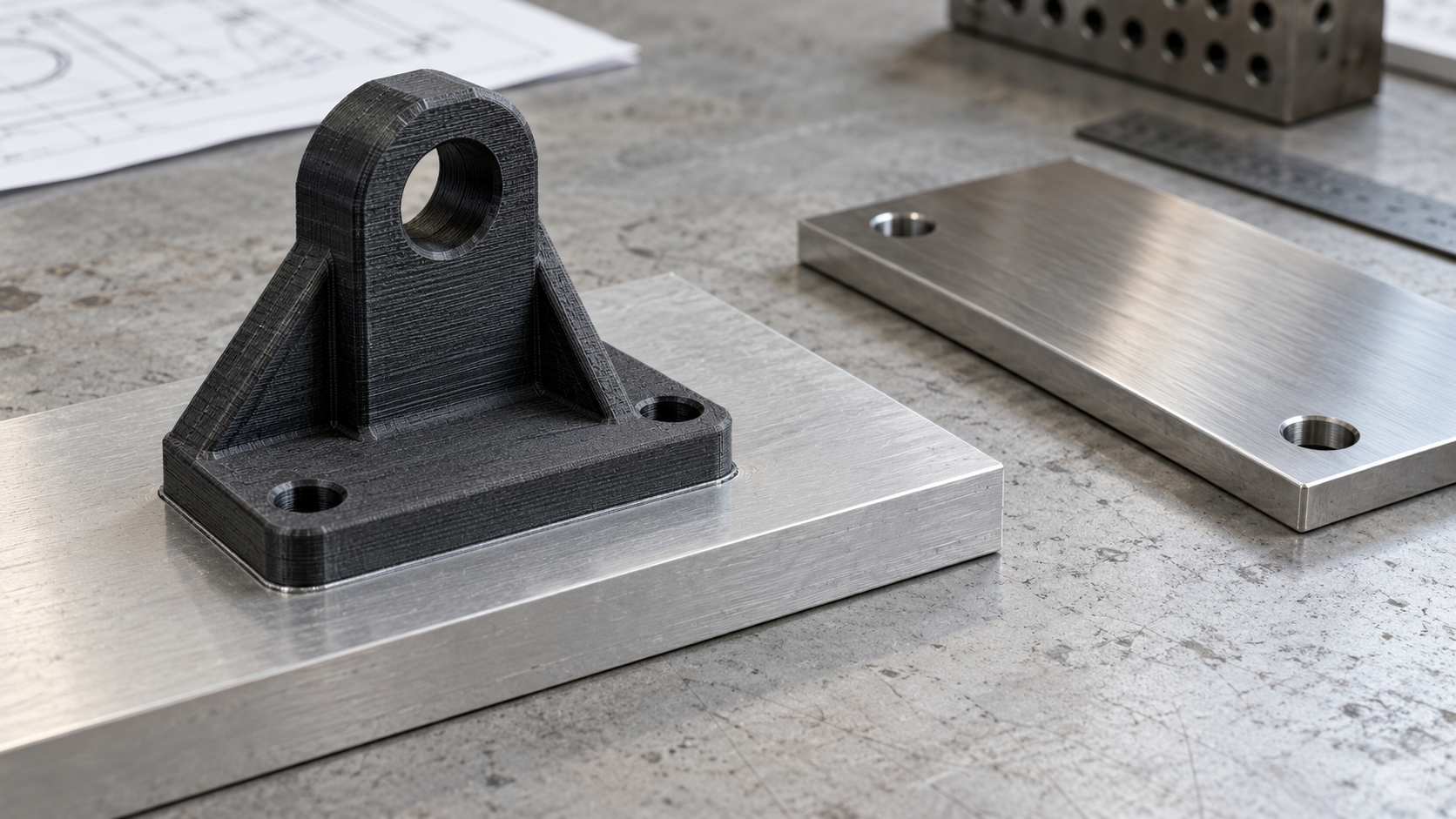
Carbon-filled PA12 is still a nylon-based material, but the fibre content, print process and surface finish can change the result. The outer bonding face may contain exposed fibres, polymer-rich areas or residues. Do not assume a data-sheet result for unfilled nylon predicts the strength of every printed component.
Make representative test pieces using the real print orientation, bond area and surface preparation. Bond them to the actual aluminium alloy and test after full cure, including relevant humidity and temperature exposure. A printed part can also break between layers before the adhesive bond fails. Our guide to gluing 3D prints covers the wider differences between PLA, ABS, PETG and nylon.
How to prepare and assemble the joint
Surface preparation matters when learning how to bond nylon to metal, even if the chosen adhesive does not require a nylon primer.
- Identify every surface. Confirm the nylon grade and whether the metal is bare, anodised, painted or powder-coated. A coating is its own bonding surface; the joint can only be as durable as that coating’s attachment to the metal.
- Clean contamination away. Remove oil, mould-release agent, handling residues and print dust. Use a cleaning method compatible with the plastic and metal, and let both surfaces dry completely.
- Prepare the metal as specified. Where appropriate, lightly abrade the metal and clean it again. Follow the adhesive manufacturer’s instructions before abrading or treating the nylon; TA4550 does not generally require a nylon primer.
- Design for the load. Provide adequate overlap and aim for shear or compression rather than a narrow joint loaded in peel. Keep the parts aligned and supported throughout the specified cure.
- Test the finished assembly. Check representative samples under the expected load, temperature and humidity. For safety-critical or production work, agree acceptance criteria before choosing the final adhesive.
The practical recommendation
For PA12 nylon bonded to aluminium, trial TA4550 first, particularly when a dependable structural joint is required. Assess the aluminium-to-stainless joint on its own merits; MA300 or ET5428 may be appropriate candidates. If your component is carbon-filled, printed, coated or load-bearing, send us the material details and service conditions so we can help narrow the selection before you commit to production. For anyone asking how to bond nylon to metal in a load-bearing assembly, testing the actual materials is the most reliable final check.