

Bonding fibreglass to metal is common in automotive panels, marine repairs, caravans, enclosures, roofing trims, tanks, and industrial fabrication. The challenge is that these two materials expand differently, flex differently, and often have contaminated surfaces. If you want a durable result, knowing how to glue fibreglass to metal properly matters more than simply choosing the strongest adhesive. For other composite materials read our guide Best Adhesive for Composite Bonding: Carbon Fibre, GRP, Aluminium & Panels (UK Guide)
The good news: modern structural adhesives make how to glue fibreglass to metal far easier than drilling, riveting, or welding brackets into place. Adhesive bonding can also help distribute stress more evenly across the joint rather than concentrating force at a few fixing points. If your project involves plastics as well as composites, read our guide on how to glue plastic to metal for mixed-material bonding jobs.
Best Adhesives for Fibreglass to Metal
Different jobs need different chemistries. Here is a practical comparison when considering how to glue fibreglass to metal:
| Adhesive Type | Best For | Strength | Flexibility | Gap Filling | When Not to Use |
|---|---|---|---|---|---|
| MMA / Acrylic | Fast structural bonding, fibreglass panels, vehicle parts | Very High | Medium | Excellent | If you need long working time |
| Epoxy | High strength permanent bonding, marine, industrial | Very High | Low-Medium | Excellent | On parts that move or vibrate heavily |
| Polyurethane | Flexible joints, vibration, mixed materials | Medium-High | High | Good | Heavy structural load joints |
| Hybrid Polymer / MS | Exterior trims, sealing + bonding | Medium | High | Good | Critical load-bearing structural bonds |
For high-load joints, you may also want to compare options in our structural adhesives UK selection guide.
Our Recommended Products
1. Best Overall for Structural Bonding
Plexus MA310 is one of the strongest all-round choices when bonding fibreglass to metal. It is a two-part methacrylate (MMA) structural adhesive designed for joining composites, plastics, and metals where high strength, speed, and toughness are needed.
When people search how to glue fibreglass to metal, this type of adhesive is often the best answer because it combines excellent adhesion with flexibility and impact resistance, rather than becoming brittle like some rigid systems. If maximum strength is the priority, explore our full selection of structural adhesives used across transport, marine, and industrial fabrication. Where ultimate strength matters more than flexibility, our best structural adhesive for metal to metal guide explains the differences in more detail.
If your project involves plastics alongside fibreglass, see our full guide on the best adhesive for plastic to metal bonding.
Why Plexus MA310 Works So Well
⚡ Fast Handling Strength
It develops strength quickly, helping reduce clamp time and speeding up production or repairs.
Example: vehicle body panel repairs where downtime matters.
High Peel & Impact Resistance
Unlike some brittle adhesives, MA310 handles shock loads, vibration, knocks, and movement very well.
Example: fibreglass covers on machinery that are opened, closed, bumped, or vibrated regularly.
Bonds Dissimilar Materials
Excellent for joining fibreglass (GRP) to:
- Mild steel
- Stainless steel
- Aluminium
- Galvanised steel
- Painted metals (after testing/prep)
This makes it ideal where mechanical fasteners would be awkward or cause cracking.
Gap Filling Ability
Many fibreglass parts are not perfectly flat. MA310 can bridge small gaps and uneven surfaces far better than thin liquid adhesives.
Example: bonding a fibreglass panel onto a formed steel frame.
Best Uses for Fibreglass to Metal
- Vehicle & Transport Panels
- Truck bodies
- Caravan panels
- Motorhome trims
- Roof pods
- Access panels
- Marine Fabrication
- Fibreglass hatches
- Fibreglass housings
- Seating bases
- Reinforcement panels bonded to metal brackets
- Industrial Enclosures
- Machine guards
- Cabinets
- Housings
- Protective covers
- Inspection doors
- General Fabrication
- Jobs where drilling holes would weaken the material
- Applications where welding brackets would take longer
- Clean panel bonding without visible fixings
- Mixed material assemblies using fibreglass and metal
Why It Often Beats Rivets or Screws
Mechanical fixings create stress points. Adhesive spreads load across the whole bond instead of all pressure landing on one point.
That means:
- Less cracking risk in fibreglass
- Cleaner finish
- No visible fixings
- Reduced corrosion risk around holes
- Better vibration damping
2. Best for High Strength Industrial Repairs
A strong two-part epoxy ideal where rigidity and long-term strength matter making it an ideal contender when researching how to glue fibreglass to metal. Great for brackets, housings, marine components, and industrial assemblies.
Permabond ET500 is a strong two-part epoxy used when you need a rigid, permanent bond between fibreglass and metal, especially where parts are static and under load.
Good Examples of When to Use It
- Brackets Fixed to Fibreglass Panels
- Bond stainless steel or aluminium mounting brackets onto fibreglass housings, cabinets, covers, or enclosures
- Example: fixing a metal support bracket inside a GRP electrical cabinet
- Marine Components
- Bond metal plates, hinges, backing pads, or fittings onto fibreglass boat structures
- Ideal where water resistance and long-term strength matter
- Example: securing an aluminium reinforcement plate inside a fibreglass hatch
- Industrial Machinery Covers / Guards
- Attach threaded inserts, plates, clips, or metal supports to fibreglass machine covers
- Example: bonding a steel latch plate to a GRP machine door
- Vehicle Bodies / Utility Boxes
- Bond metal reinforcement strips or mounting plates inside fibreglass truck bodies, kiosks, or service compartments
- Example: fixing internal metal mounting rails to a fibreglass van conversion wall
- Long-Term Static Structural Repairs
- Repair cracked fibreglass using a metal strengthening plate behind the damaged area
- Example: bonding an aluminium backing plate behind a cracked GRP panel
Do NOT Use It For
- Constant Vibration
- Trailer panels
- Vibrating machinery guards
- Engine bay plastics
- Repeated movement can fatigue rigid epoxy bonds over time
- High Thermal Expansion Movement
- Outdoor joints exposed to strong sunlight
- Metal heats and expands faster than fibreglass
- Repeated expansion and contraction can stress the bond line
- Flexible Panels
- Thin fibreglass sheets that bend regularly
- Panels subject to twisting or deflection during use
- Rigid adhesives may crack or detach as the panel flexes
- Better Alternatives for These Jobs
- MMA structural adhesives for strength with more toughness
- Polyurethane adhesives for flexible, movement-tolerant bonding
Quick Rule of Thumb
If the joint is solid, static, and needs brute-force long-term strength, epoxy is king.
If the joint moves, flexes, or vibrates, choose something tougher and more elastic.
Bonding rubber as well as GRP? Read our article on how to glue rubber to metal for similar surface prep advice.
3. Best Premium Toughened Epoxy for Fibreglass to Metal
Permabond ET5428 is a high-performance toughened two-part epoxy ideal where high strength is required but standard rigid epoxies may be too brittle. When considering how to glue fibreglass to metal, it offers a more durable alternative to standard epoxies in applications where some movement or impact resistance is needed.
Unlike basic epoxies, ET5428 offers improved peel strength, impact resistance and fatigue resistance, making it a superb option for fibreglass to metal joints exposed to vibration, occasional knocks, or temperature cycling.
Best Uses
- Caravan and motorhome body panel reinforcement
- Marine hatch and locker repairs
- Aluminium brackets bonded to GRP housings
- Carbon fibre or fibreglass bonded to metal frames
- Industrial covers and machine guards
Why It Works Well
High Structural Strength
Excellent permanent bond to metals and composites.
Better Toughness Than Standard Epoxy
Handles shock and movement better than brittle systems.
Good Gap Filling
Useful on uneven GRP mouldings.
Black Bond Line
Popular where a darker adhesive line is preferred.
Do NOT Use For
- Polypropylene / polyethylene plastics
- Constant flexible joints
- Ultra-fast production lines needing rapid fixture
Quick Rule of Thumb
Need epoxy strength but less brittleness? Choose ET5428.
4. Best for Flexible Outdoor Bonding
ARBO Arbothane 1245 is ideal for bonding fibreglass to metal where the joint needs to move, flex, and withstand outdoor conditions. Unlike rigid epoxies, polyurethane adhesives cure to a tough elastic bond that absorbs vibration, expansion, and contraction.
When choosing how to glue fibreglass to metal for external use, flexible adhesives are often the better long-term option.
Why It Works Well Outdoors
- Weather Resistant
- Handles rain, humidity, and changing temperatures
- Good for exterior panels and housings
- Accommodates Movement
- Metal and fibreglass expand at different rates
- Flexible bond line helps prevent failure
- Absorbs Shock & Vibration
- Ideal for transport and machinery use
- Reduces stress cracking over time
- Bonds Dissimilar Materials
Suitable for fibreglass to:- Aluminium
- Mild steel
- Painted metal
- Galvanised steel
Best Uses for Fibreglass to Metal
- Caravan & Motorhome Panels
- Trims
- Access doors
- External covers
- Vehicle Bodies
- Fibreglass body sections bonded to metal frames
- Outdoor Industrial Covers
- Cabinets
- Steel-framed enclosures
- Protective housings
- Marine & Waterside Jobs
- Lockers
- Non-submerged panels
- External housings
- Construction & Fabrication
- Fibreglass trims bonded to metal framework
Why It Often Beats Rigid Adhesives
- Less cracking risk
- Better vibration tolerance
- Better fatigue resistance
- Better outdoor durability
- Longer life on moving joints
Rigid adhesives can crack under movement, while polyurethane stays slightly flexible. If your application includes seals or gaskets, see our guide on how to glue rubber to metal for flexible bonding applications.
Do NOT Use When
- Immediate Structural Handling Strength Is Needed
- Slower curing than MMA adhesives
- Heavy Structural Load Bonds
- Use structural MMA where maximum strength is required fast
- Fast Production Lines
- Not ideal if parts need moving quickly after bonding
Real Example Jobs
- Bonding a fibreglass roof pod to a metal support frame
- Fixing caravan trims to aluminium bodywork
- Attaching fibreglass covers to vibrating steel machinery housings
Quick Rule of Thumb
- Need movement + weather resistance + durability? Use polyurethane.
- Need speed + high structural strength? Use MMA adhesive instead.
5. Best for Sealing + Bonding
HB42 Ultimate Sealant & Adhesive is an excellent choice when you need to bond fibreglass to metal while also creating a weatherproof seal. It is ideal for trims, covers, housings, and non-structural assemblies where preventing water ingress, drafts, dust, or rattling is just as important as adhesion.
When deciding how to glue fibreglass to metal for lighter-duty applications, hybrid polymer adhesives like HB42 can be a very practical all-round solution.
Why It Works Well
- Bonds and Seals in One Step
- Eliminates the need for separate adhesive and sealant
- Saves time during installation
- Flexible Bond Line
- Handles slight movement between fibreglass and metal
- Helps reduce cracking and joint fatigue
- Weather Resistant
- Good resistance to rain, moisture, and outdoor conditions
- Suitable for internal and external use
- Good Gap Filling
- Helps seal uneven surfaces or small gaps
- Useful where panels do not sit perfectly flat
- Low Odour / User Friendly
- Easier to apply than some aggressive solvent systems
Best Uses for Fibreglass to Metal
- Vehicle & Caravan Trims
- Edge trims
- External mouldings
- Access covers
- Protective Covers & Housings
- Electrical housings
- Inspection covers
- Decorative panels
- Marine & Outdoor Fixtures
- Locker lids
- Non-structural covers
- Splash guards
- Construction & Fabrication
- Fibreglass trims fixed to metal framework
- Cover panels and finishing sections
- Anti-Rattle Panel Bonding
- Helps reduce vibration noise on covers and trims
Why It Often Beats Rigid Adhesives
- Seals water and dust at the same time
- Better on light movement joints
- Cleaner appearance with no visible fixings
- Helps reduce rattles and vibration noise
- Easier application for general fitting work
Rigid adhesives can be excessive for trims and covers where sealing matters more than brute-force strength.
Do NOT Use When
- High Engineering Loads Are Involved
- Heavy brackets
- Structural mounting points
- Safety-critical components
- Very High Peel or Impact Loads
- Repeated harsh shock loading
- Immediate High Handling Strength Is Needed
- Structural MMA systems cure stronger and faster for these jobs
Real Example Jobs
- Bonding a fibreglass access cover onto a metal frame while sealing edges
- Fixing caravan trim panels to aluminium bodywork
- Securing a fibreglass electrical housing lid to painted steel
- Bonding machine side covers where vibration noise needs reducing
Poor Example:
- Mounting a heavy steel bracket onto a fibreglass panel carrying constant load
Quick Rule of Thumb
- Need sealing + bonding + flexibility? Use HB42.
- Need serious structural strength? Use MMA or epoxy instead.
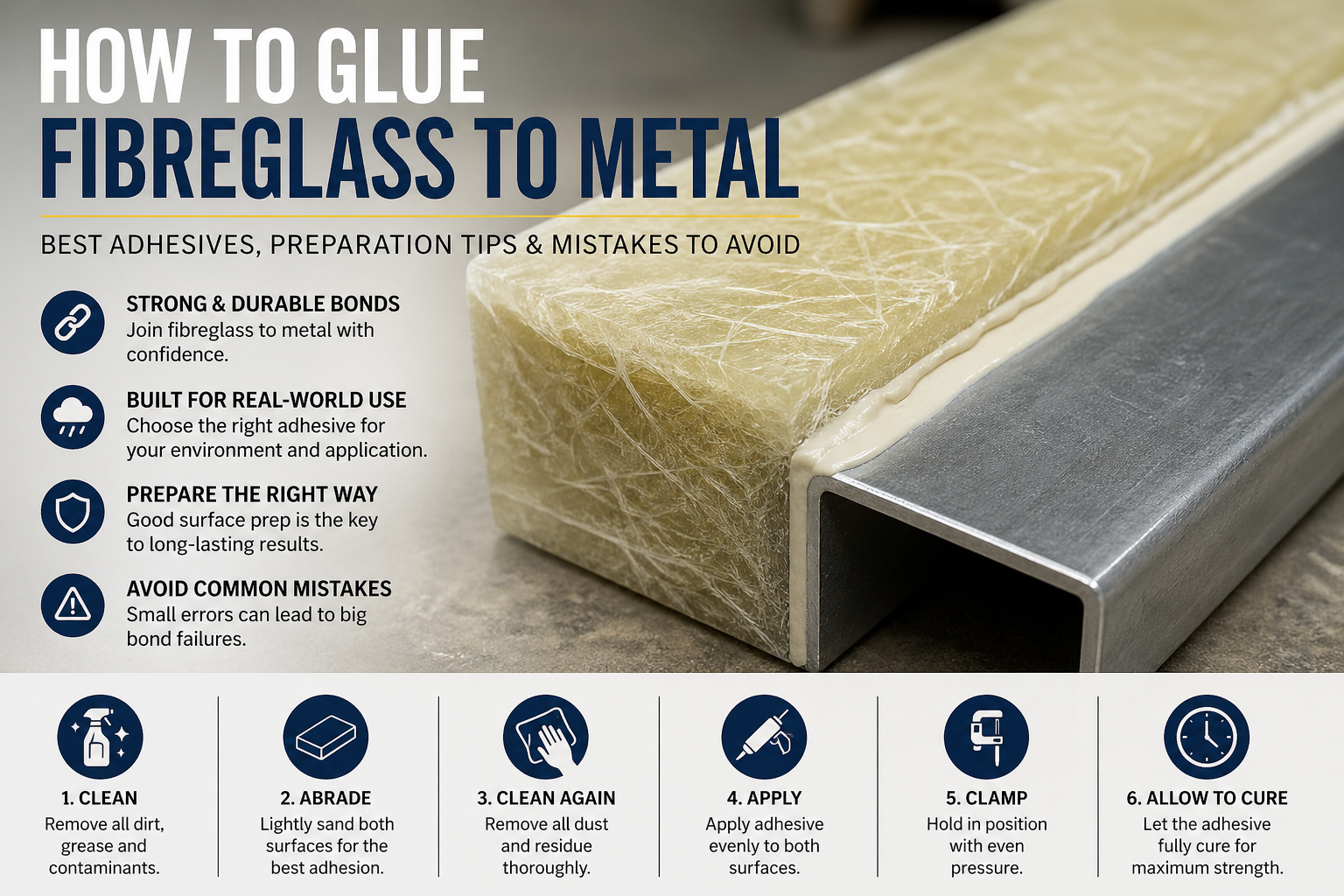
How to Glue Fibreglass to Metal Properly
Proper surface preparation and adhesive selection are key factors in durable composite bonding, as highlighted by Composites UK. If you want the bond to last, follow this method:
- Step 1: Clean Both Surfaces
- Remove grease, wax, release agent, dirt, and oxidation
- Use isopropyl alcohol or a suitable degreaser
- Step 2: Abrade Lightly
- Sand both surfaces with 80 to 120 grit abrasive paper
- Creates a mechanical key for stronger adhesion
- Step 3: Clean Again
- Remove all sanding dust and loose debris fully
- Step 4: Apply Adhesive Evenly
- Use enough adhesive to fully wet both surfaces
- Avoid dry spots or missed areas
- Step 5: Clamp or Hold in Position
- Maintain even pressure while the adhesive cures
- Prevent movement during setting
- Step 6: Allow Full Cure
- Do not disturb the bond too early
- Many bond failures happen from premature handling
Common Mistakes to Avoid
- Using Silicone Sealant Instead of Adhesive
- Silicone can be useful for sealing joints
- Often not suitable for structural fibreglass-to-metal bonding
- Lacks the strength needed for load-bearing applications
- Bonding Over Paint or Rust
- Adhesive only bonds as well as the layer underneath
- Loose paint, corrosion, or contamination can cause failure
- Remove weak coatings where possible before bonding
- Too Thin a Bond Line
- Some structural adhesives need a controlled bond line thickness
- Squeezing the joint completely flat can reduce performance
- Follow product guidance for ideal bond gap
- Ignoring Movement
- Metal and fibreglass expand at different rates with temperature changes
- Rigid adhesives may crack or fatigue over time
- Flexible systems are often better for outdoor use
- Key Tip
- Many bonding failures come from preparation or joint design, not the adhesive itself
Final Verdict
If you need the best answer for how to glue fibreglass to metal, choose based on movement, load, and environment:
- Maximum structural strength: Plexus MA310
- Rigid permanent engineering bond: Permabond ET500
- Flexible outdoor bond: Arbothane 1245
- Trim + seal jobs: HB42
For most applications regarding how to glue fibreglass to metal, a structural MMA adhesive is the strongest all-round choice. A key part of understanding how to glue fibreglass to metal is choosing the right adhesive chemistry for the environment the bond will be exposed to.
If you need help selecting the right product, visit our Technical Hub for more adhesive guides and bonding advice.
Hi, I have a fibreglass horse box that needs sealed and bonded to the metal frame at the bottom, can you advise me what is the best product to use. Thanks in advance.
Hi Kevin
thanks for your enquiry, I have just sent across an email with all info