
Description
What is Neoprene Sponge Cord?
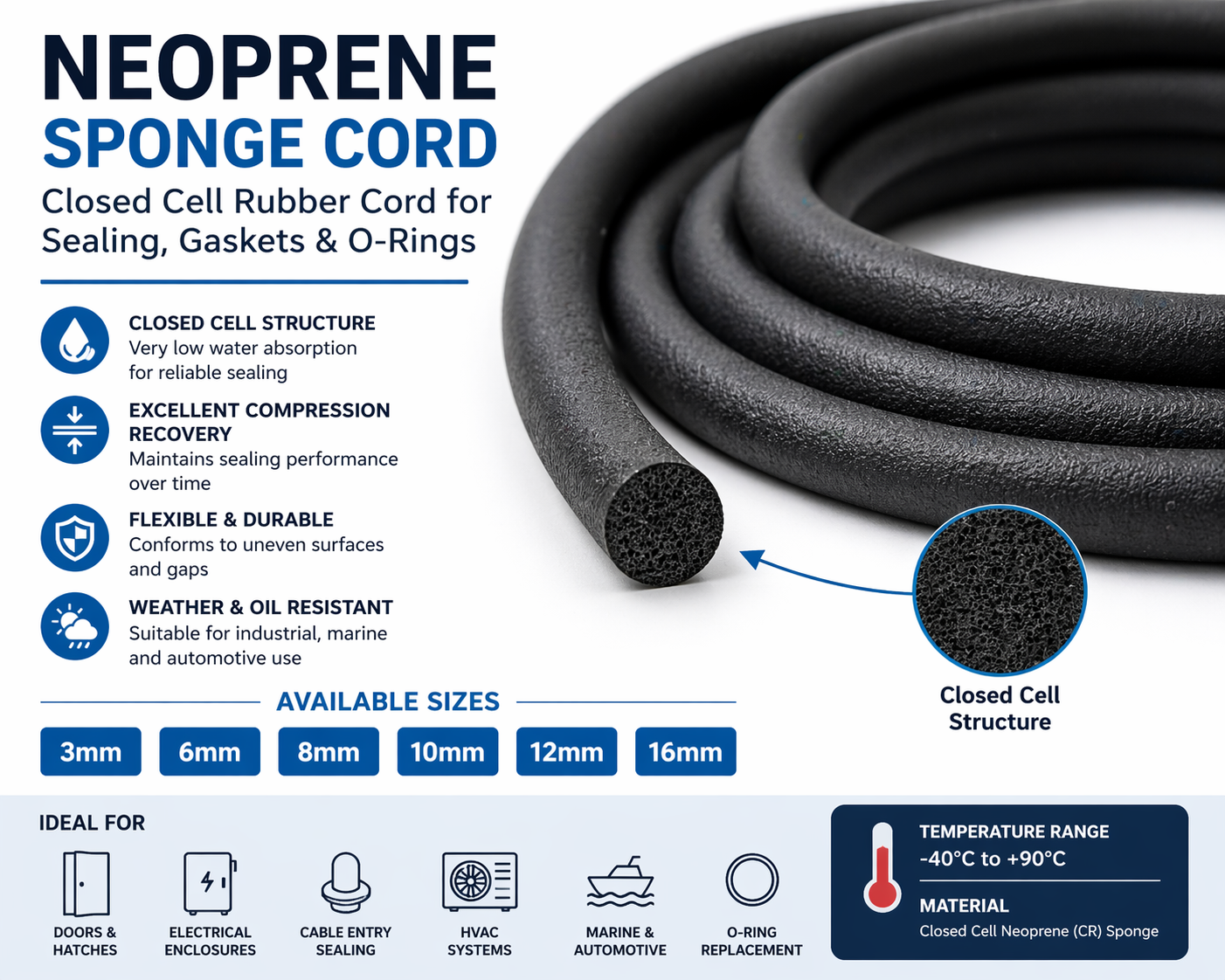
Closed cell neoprene rubber cord is a flexible, compressible sealing material used for gasketing, cushioning and weatherproof seals. It compresses under pressure to form airtight and watertight barriers, making it ideal for doors, enclosures, HVAC systems, automotive panels and marine applications.
If you need a durable rubber cord that creates reliable airtight and watertight seals, neoprene sponge cord is designed for the job.
This closed-cell neoprene sponge cord compresses under pressure to form a reliable seal against air, water and dust, making it ideal for doors, hatches, electrical enclosures, HVAC panels and marine sealing applications. For outdoor sealing, EPDM sponge rubber may offer better UV resistance.
Unlike solid rubber, this material compresses easily and recovers its shape, ensuring consistent sealing performance over time.
Best For (High-Intent Uses)
- Door & hatch seals – prevent draughts and water ingress
- Electrical enclosures – seal panels, lids and cabinets
- Cable entry sealing – create tight seals around penetrations
- HVAC systems – compressible sealing for ducting and panels
- Marine & automotive sealing – flexible weather-resistant gasket material
- O-ring replacement & continuous gasket runs
👉 If your application requires a round, compressible seal, neoprene sponge cord is the correct material. For flat sealing applications, see our neoprene sponge sheets.
Why Choose Neoprene Sponge Cord
- Closed-Cell Structure – very low water absorption for dependable sealing
- Excellent Compression Recovery – maintains sealing performance over time
- Flexible & Easy to Install – conforms to uneven surfaces and gaps
- Good Oil & Weather Resistance – suitable for industrial and automotive use
- Easy to Cut & Join – create custom seals or O-rings on-site
Neoprene Sponge Cord vs EPDM Sponge Cord vs Silicone Cord
| Material | Best For | Weather | Oil Resistance |
|---|---|---|---|
| Neoprene | General sealing | Good | Excellent |
| EPDM | Outdoor use | Excellent | Poor |
| Silicone | High temp | Excellent | Fair |
⚠️ Important Selection Advice
- Choose a diameter slightly larger than your gap
- Compress by 20–30% for an effective seal
👉 Example:
6mm gap → use 8mm neoprene sponge cord
Correct compression is essential for sealing performance.
Available Sizes of Neoprene Sponge Cord
Neoprene sponge cord is available in a range of diameters to suit different sealing applications:
-
- 3mm neoprene sponge cord for light sealing
- 6mm neoprene sponge cord for cabinets and panels
- 8mm neoprene sponge cord for doors and hatches
- 10mm neoprene sponge cord for industrial sealing
- 12mm neoprene sponge cord for marine and automotive use
- 16mm neoprene sponge cord for large gaps
📏 Product Details
- Material: Closed-cell Neoprene (CR) Sponge
- Density: 130–180 kg/m³
- Hardness: Approx. 5–10 Shore 00
- Temperature Range: -40°C to +90°C
- Water Absorption: Very low
- Chemical Resistance: Good (oils, greases, ageing)
- UV / Ozone Resistance: Moderate
- Colour: Black
- Supply Format: Coils (various diameters available)
Typical Applications
- Door and enclosure sealing
- Cable sealing and entry points
- HVAC panel gaskets
- Marine and automotive sealing
- Fabricated O-rings and gasket runs
For bonding rubber materials, see our guide to the best adhesive for rubber.
Neoprene Rubber Cord FAQs
What is neoprene cord used for?
Used for sealing, gasketing and vibration damping in automotive, marine, HVAC and industrial applications.
How do I choose the correct diameter?
Choose a cord 20 to 30% larger than the gap for compression. Example: 6mm gap = 8mm cord.
Is neoprene rubber cord waterproof?
Yes. Its closed-cell structure resists water absorption and helps create a moisture seal.
What temperature can it withstand?
Typically -40°C to +90°C. For prolonged outdoor use, EPDM may be better.
Can neoprene cord be joined into an O-ring?
Yes. Cut square and bond using rubber adhesive or cyanoacrylate.
What lengths are supplied?
Usually supplied in coils. Custom cut lengths available on request.
Read more on our neoprene guide here