
Finding the best adhesive for stainless steel depends on more than simply choosing the strongest product available. Stainless steel is used across engineering, construction, food processing, marine applications, automotive manufacturing and home improvement because of its corrosion resistance and durability. However, the ideal adhesive varies depending on the material you’re bonding, the service environment and the performance required.
Whether you’re bonding stainless steel to another metal, glass, plastic, rubber or composite materials, selecting the correct adhesive will improve strength, longevity and reliability.
In this guide we’ll compare the most effective adhesive technologies, explain where each performs best, recommend suitable products, and help you avoid common bonding mistakes.
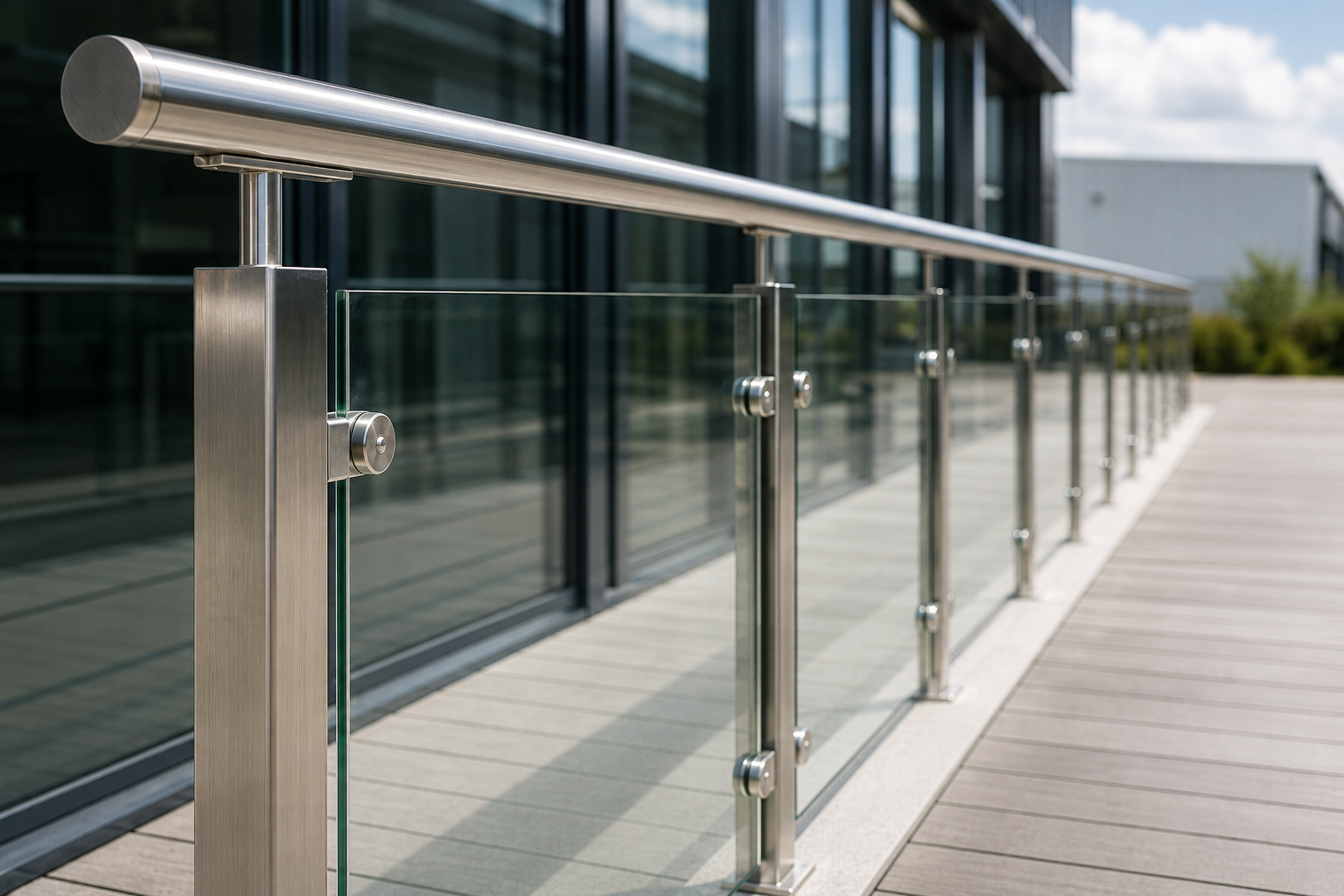
Why Bond Stainless Steel Instead of Welding?
Mechanical fixings and welding have traditionally been used for stainless steel assemblies, but modern structural adhesives offer several advantages.
Benefits of adhesive bonding
- No heat distortion
- Prevents damage to protective coatings
- Reduces galvanic corrosion between dissimilar metals
- Bonds different materials together
- Evenly distributes stress across the joint
- Creates cleaner cosmetic finishes
- Helps seal against water and moisture
- Reduces vibration and fatigue
For many applications, structural adhesives now provide a lighter, cleaner and more efficient alternative to welding or riveting.
Is Stainless Steel Difficult to Bond?
Contrary to popular belief, stainless steel is generally one of the easier engineering metals to bond successfully.
The challenge comes from its naturally occurring chromium oxide layer, which protects against corrosion but must be clean and free from contaminants before bonding.
Oil, grease, machining fluids or fingerprints can significantly reduce adhesion if surfaces are not properly prepared.
Surface Preparation
Even the strongest adhesive cannot compensate for poor surface preparation.
For the best bond:
- Remove dirt and grease using isopropyl alcohol (IPA) or acetone.
- Abrade smooth surfaces using 120 to 240 grit abrasive paper where practical.
- Remove sanding dust.
- Clean again using fresh IPA.
- Allow surfaces to dry completely.
- Avoid touching prepared surfaces with bare hands.
Proper preparation can often improve bond strength more than changing to a more expensive adhesive.
Adhesive Comparison Chart
| Adhesive Type | Strength | Gap Filling | Outdoor Use | Flexible | Best Applications |
|---|---|---|---|---|---|
| MMA (Methacrylate) | ★★★★★ | Excellent | Excellent | Medium | Structural metal bonding |
| Epoxy | ★★★★★ | Excellent | Excellent | Low | Heavy loads and rigid joints |
| UV Adhesive | ★★★★★ | Poor | Indoor | Low | Glass to stainless steel |
| Polyurethane | ★★★★☆ | Good | Excellent | Excellent | Outdoor panels and construction |
| MS Polymer | ★★★★☆ | Good | Excellent | Excellent | Expansion joints and sealing |
| Contact Adhesive | ★★★☆☆ | Poor | Good | Excellent | Rubber and flexible materials |
| Cyanoacrylate | ★★★☆☆ | Poor | Fair | Poor | Small precision components |
Which Adhesive Should You Choose?
The table below provides a quick recommendation based on the materials being bonded.
| Materials | Recommended Adhesive |
|---|---|
| Stainless steel to stainless steel | Plexus MA310 or Permabond TA4246 |
| Stainless steel to aluminium | Plexus MA310 |
| Stainless steel to glass | Permabond UV610 or UV6260 |
| Stainless steel to acrylic | Permabond TA4205 |
| Stainless steel to polycarbonate | Permabond TA4205 |
| Stainless steel to ABS | Permabond TA4205 |
| Stainless steel to rubber | Bostik 2402 or Permabond ET5428 |
| Stainless steel exposed outdoors | Sika 521 UV or MS Polymer |
| Food processing equipment | Permabond ET5164 |
For food grade applications read our guide Best Food Grade Adhesive for Stainless Steel: Permabond ET5164
Product Comparison
| Product | Chemistry | Cure Speed | Strength | Indoor | Outdoor | Typical Uses |
|---|---|---|---|---|---|---|
| Plexus MA310 | MMA | Fast | ★★★★★ | ✓ | ✓ | Structural fabrication |
| Permabond TA4246 | Acrylic | Medium | ★★★★★ | ✓ | ✓ | Heavy engineering |
| Permabond TA4205 | Acrylic | Fast | ★★★★★ | ✓ | ✓ | Plastic to metal |
| Permabond UV610 | UV | Seconds | ★★★★★ | ✓ | Limited | Glass assemblies |
| Permabond ET5164 | Epoxy | Medium | ★★★★★ | ✓ | ✓ | Food equipment |
| Sika 521 UV | MS Polymer | Medium | ★★★★☆ | ✓ | ✓ | Exterior panels |
| Bostik 2402 | Contact Adhesive | Fast | ★★★☆☆ | ✓ | ✓ | Rubber bonding |
When to Use Each Adhesive
MMA Adhesives (Plexus MA310)
Best for
- Stainless steel frameworks
- Aluminium fabrication
- Heavy engineering
- Vehicle body construction
- Composite panels
Advantages
- Outstanding impact resistance
- Excellent gap filling
- Bonds many substrates with minimal preparation
- High peel strength
Avoid if
- Optical clarity is required
- Very thin cosmetic bond lines are needed
- Extremely fast positioning is essential, in this instance use Plexus MA300
Buy now: Plexus MA310 50ml
Epoxy Adhesives (Permabond ET5164)
Best for
- Heavy static loads
- Food processing machinery
- Industrial equipment
- Stainless steel brackets
- Chemical resistance
Advantages
- Extremely high tensile strength
- Excellent temperature resistance
- Outstanding chemical resistance
Avoid if
- Continuous movement or vibration is expected
- Flexible joints are required
- Fast production speeds are critical
Buy now: Permabond ET5164
For other glass to metal applications find our more information on which adhesive is best: Best Adhesive for Glass to Metal Bonding (UK Guide)
UV Adhesives (Permabond UV610)
Best for
- Stainless steel to glass
- Display cabinets
- Furniture
- Decorative fittings
Advantages
- Crystal clear finish
- Cures in seconds
- Invisible bond lines
Avoid if
- UV light cannot reach the adhesive
- Opaque materials are being bonded
- Large gap-filling is required
Buy now: Permabond UV610
For further information about stainless steel grades, corrosion resistance and material properties, the British Stainless Steel Association provides an excellent technical resource.
When bonding stainless steel to stainless steel, the primary consideration is the load the joint will experience. Decorative applications place very different demands on an adhesive compared to structural fabrications, machine guards or industrial equipment.
For high-strength applications, structural methacrylate (MMA) adhesives and epoxies generally provide the best combination of strength, durability and environmental resistance.
Recommended Products
| Product | Strength | Gap Fill | Working Time | Best For |
|---|---|---|---|---|
| Plexus MA310 | ★★★★★ | Excellent | 15 to 18 minutes | Structural fabrication, vehicle bodies, machinery |
| Permabond TA4246 | ★★★★★ | Excellent | Medium | Heavy engineering and industrial assemblies |
| Permabond ET5164 | ★★★★★ | Very Good | Medium | Food-grade stainless equipment |
| Sika 521 UV | ★★★★☆ | Good | Medium | Exterior cladding and flexible joints |
Why choose Plexus MA310?
Plexus MA310 is one of the industry’s leading structural MMA adhesives. It develops extremely high bond strength whilst maintaining excellent peel resistance and impact performance.
It is particularly suited to:
- Fabricated stainless frames
- Vehicle body manufacture
- Stainless brackets
- Industrial machinery
- Marine components
Unlike many epoxies, MA310 maintains slight flexibility, allowing it to absorb vibration rather than becoming brittle over time.
When NOT to use MA310
Avoid MA310 if:
- The joint must be completely invisible.
- Optical clarity is required.
- Bond lines are extremely thin.
- Food-contact approval is required.
For faster fixture time (3-6 mins) use Plexus MA300 or Permabond TA4204 (1-2 mins)
Best Adhesive for Stainless Steel to Aluminium
Bonding stainless steel to aluminium presents a different challenge because the materials expand at different rates during temperature changes.
Rigid adhesives can sometimes concentrate stress, whereas MMA adhesives tolerate movement extremely well.
Recommended Products
Why MMA adhesives perform so well
Methacrylate adhesives:
- Tolerate differential expansion
- Resist vibration
- Fill manufacturing gaps
- Bond both metals exceptionally well
This makes them ideal for:
- Automotive panels
- Aluminium frames
- Machine enclosures
- Architectural assemblies
- Transportation equipment
Avoid using
- Brittle instant adhesives
- Standard PVA adhesives
- Low-strength silicone sealants for structural applications
For specialist metal bonding solutions read our guide Best Adhesive for Bonding Diamond to Metal: Permabond ES550
Best Adhesive for Stainless Steel to Glass
Glass requires an entirely different bonding approach.
Where UV light can reach the adhesive, UV-curing adhesives produce almost invisible bond lines with exceptional strength.
Where UV cannot penetrate the joint, two-part acrylics or specialised hybrid adhesives become the better option.
Recommended Products
Ideal applications
- Glass balustrades
- Furniture
- Trophy manufacture
- Glass shelving
- Retail displays
- Decorative stainless fittings
Advantages of UV adhesives
- Cure in seconds
- Invisible finish
- Extremely high strength
- Excellent UV stability
- Professional appearance
When NOT to use UV adhesives
UV adhesives should not be used when:
- Both materials are opaque.
- UV light cannot reach the adhesive.
- Bond lines exceed the manufacturer’s recommendations.
- Large gaps need filling.
Best Adhesive for Stainless Steel to Plastic
There is no single adhesive suitable for every plastic.
Some plastics bond exceptionally well, whilst others require specialist surface treatments or primers.
Recommended Products by Plastic Type
Best Overall Choice
For most engineering plastics, Permabond TA4205 offers an excellent balance of:
- Fast cure
- High structural strength
- Good gap filling
- Excellent environmental resistance
This makes it suitable for:
- Control panels
- Machine guards
- Consumer products
- Automotive trim
- Engineering housings
Plastics that require extra care
Low surface energy plastics such as:
- Polypropylene (PP)
- Polyethylene (PE)
- PTFE
are naturally difficult to bond.
These materials generally require specialist primers or dedicated adhesive systems such as Permabond TA4610 or TA4611 to achieve reliable long-term adhesion.
Best Adhesive for Stainless Steel to Rubber
Bonding rubber to stainless steel depends largely on the type of rubber being used, whether flexibility is required after curing, and the level of stress the joint will experience.
For many industrial applications, cyanoacrylate adhesives provide an extremely fast and reliable solution. However, some low surface energy rubbers such as EPDM require the use of a primer to achieve optimum bond strength.
Recommended Products
| Rubber Type | Recommended Product | Notes |
|---|---|---|
| EPDM | Permabond 737 + POP Primer | Excellent for difficult-to-bond rubber |
| Neoprene | Permabond 105 | Fast curing, high strength |
| Natural Rubber | Permabond 105 | Excellent general-purpose choice |
| Nitrile (NBR) | Permabond 105 | Ideal for seals and gaskets |
| Silicone Rubber | Specialist silicone adhesive | Cyanoacrylates generally not recommended |
Permabond 105
Permabond 105 is a fast-curing ethyl cyanoacrylate that provides excellent adhesion to many rubber grades and stainless steel.
It is particularly suitable for:
- Rubber gaskets
- O-rings
- Nitrile seals
- Neoprene components
- Natural rubber parts
- Small precision assemblies
Advantages
- Fixtures in seconds
- High tensile strength
- Excellent bond to most rubbers
- Simple one-part application
- Ideal for production environments
When Not to Use
Permabond 105 may not be the best choice where:
- Large bond gaps are present.
- Continuous joint flexibility is required.
- EPDM or other low surface energy rubbers are being bonded without a primer.
- Long-term immersion in aggressive chemicals is expected.
Permabond 737 with POP Primer
EPDM and certain thermoplastic elastomers are notoriously difficult to bond due to their very low surface energy. In these cases, using Permabond POP Primer with Permabond 737 dramatically improves adhesion and provides a reliable structural bond.
This system is recommended for:
- EPDM rubber seals
- Automotive weather strips
- Industrial gaskets
- Roofing membranes
- Rubber extrusion profiles
Advantages
- Excellent adhesion to difficult rubbers
- Very fast fixture time
- High production efficiency
- Minimal surface preparation required after priming
- Proven industrial solution for low surface energy materials
When Not to Use
Avoid this system if:
- A flexible silicone adhesive is specifically required.
- The bond gap exceeds typical cyanoacrylate tolerances.
- The joint will experience significant peel or continuous flexing.
Alternative Option: Bostik 2402
Where flexibility is more important than ultimate strength, a contact adhesive such as Bostik 2402 remains an excellent option.
Typical applications include:
- Conveyor belting
- Flexible rubber sheeting
- Large weather seals
- Foam and rubber laminates
- Trim and upholstery work
Unlike cyanoacrylates, contact adhesives remain flexible after curing, making them well suited to larger bonded areas and components that experience regular movement.
Outdoor Stainless Steel Bonding
Outdoor applications place much greater demands on an adhesive than indoor environments. In addition to carrying the intended load, the adhesive must withstand rain, UV exposure, temperature fluctuations, vibration and moisture without losing performance.
Where slight movement between materials is expected, a flexible adhesive is often a better choice than a rigid epoxy.
Recommended Products
| Product | UV Resistant | Waterproof | Flexible | Best For |
|---|---|---|---|---|
| Sika 521 UV | ✔ | ✔ | ★★★★★ | Exterior panels, cladding, marine |
| Plexus MA310 | ✔ | ✔ | ★★★★☆ | Structural outdoor fabrication |
| Permabond TA4246 | ✔ | ✔ | ★★★★☆ | Heavy engineering |
| MS Polymer Sealants | ✔ | ✔ | ★★★★★ | Exterior joints and sealing |
Typical Outdoor Applications
- Stainless steel handrails
- Architectural panels
- Signage
- Outdoor furniture
- Marine fittings
- Solar panel brackets
- Agricultural equipment
- Vehicle bodywork
When to Choose a Flexible Adhesive
A flexible adhesive is preferable where:
- Different materials expand at different rates.
- Vibration is present.
- Outdoor temperature changes are significant.
- Water ingress needs to be prevented.
- The joint also acts as a seal.
Rigid structural epoxies remain an excellent choice where movement is minimal and maximum compressive strength is required.
Best Food Safe Adhesive for Stainless Steel
Food processing equipment often requires adhesives that provide excellent chemical resistance whilst meeting food contact requirements where applicable.
One of the most suitable products is Permabond ET5164, a two-part epoxy developed for demanding industrial applications.
Typical Applications
- Food production machinery
- Stainless worktops
- Filling equipment
- Conveyor systems
- Processing lines
- Packaging equipment
Benefits
- Excellent bond strength
- High chemical resistance
- Good temperature resistance
- Durable in wash-down environments
- Suitable for many hygienic manufacturing applications
Tip: Always confirm whether the adhesive itself requires a specific food-contact approval for your application, particularly where cured adhesive may come into direct contact with food. To r
Common Mistakes When Bonding Stainless Steel
Even premium structural adhesives can fail if the bonding process is not carried out correctly.
Here are the most common causes of bond failure.
1. Poor Surface Cleaning
Oil, grease and fingerprints can significantly reduce adhesion.
Always:
- Degrease thoroughly.
- Use clean IPA wipes.
- Avoid touching cleaned surfaces before bonding.
2. Choosing the Wrong Adhesive
No single adhesive works best for every application.
For example:
❌ UV adhesive is not suitable where UV light cannot penetrate the bond line.
❌ Contact adhesive should not be used for structural metal fabrication.
❌ Instant adhesives are unsuitable for large gap-filling joints.
Selecting the correct adhesive chemistry is often more important than selecting the strongest advertised product.
3. Insufficient Adhesive Coverage
Applying too little adhesive can create stress concentrations and reduce joint strength.
The adhesive should wet both surfaces evenly without excessive squeeze-out.
4. Ignoring Cure Time
Handling a bonded assembly before the adhesive reaches its full cure can permanently weaken the joint.
Always follow the manufacturer’s:
- Fixture time
- Handling time
- Full cure time
These are not the same.
5. Large Bond Gaps
Some adhesives perform best with very thin bond lines, while others are designed to fill larger gaps.
For example:
| Adhesive Type | Typical Gap Filling |
|---|---|
| UV Adhesives | Very Low |
| Cyanoacrylates | Low |
| Epoxies | Excellent |
| MMA Adhesives | Excellent |
| MS Polymers | Excellent |
Which Adhesive Chemistry is Right for You?
| Requirement | Best Choice |
|---|---|
| Maximum strength | MMA Adhesive |
| Heavy engineering | Epoxy |
| Invisible glass bonds | UV Adhesive |
| Flexible outdoor joint | MS Polymer |
| Rubber bonding | Contact Adhesive |
| Fast assembly | MMA |
| Decorative furniture | UV Adhesive |
| Water sealing | Polyurethane / MS Polymer |
Frequently Asked Questions
What is the best adhesive for stainless steel?
For most structural applications, Plexus MA310 and Permabond TA4246 are excellent choices due to their high strength, durability and resistance to vibration. The best adhesive for stainless steel ultimately depends on the material being bonded and the service environment.
Can stainless steel be glued instead of welded?
Yes. Modern structural adhesives can provide extremely strong, durable bonds while avoiding heat distortion, reducing stress concentrations and allowing dissimilar materials to be joined together.
Will epoxy stick to stainless steel?
Yes. High-quality structural epoxies bond exceptionally well to properly prepared stainless steel surfaces and are widely used in engineering and industrial manufacturing.
Do I need to roughen stainless steel before bonding?
Where practical, lightly abrading the surface improves mechanical adhesion and can increase bond strength. This should always be followed by thorough cleaning to remove any dust or debris.
Can I bond stainless steel outdoors?
Absolutely. Products such as Sika 521 UV, Plexus MA310 and Permabond TA4246 are all suitable for outdoor applications when used correctly.
Can stainless steel be bonded to glass?
Yes. UV-curing adhesives such as Permabond UV610 create crystal-clear, high-strength bonds where UV light can reach the adhesive.
Can stainless steel be bonded to plastic?
Yes. Acrylic adhesives such as Permabond TA4205 are excellent for bonding stainless steel to many engineering plastics, including ABS, acrylic and polycarbonate.
Which adhesive is best for stainless steel and rubber?
Flexible rubber components are commonly bonded using Bostik 2402, while structural rubber assemblies may benefit from Permabond ET5428, depending on the rubber type and application.
Final Thoughts
Choosing the best adhesive for stainless steel is about matching the adhesive chemistry to the materials involved, the expected loads and the environmental conditions. While no single product is ideal for every project, selecting the right adhesive and preparing the surfaces correctly will significantly improve bond strength and long-term durability.
For structural metal fabrication, Plexus MA310 and Permabond TA4246 remain outstanding choices. Where a clear finish is essential, Permabond UV610 offers excellent performance for glass bonding, while Permabond TA4205 is a versatile option for many stainless steel to plastic applications. Outdoor assemblies often benefit from the flexibility and weather resistance of Sika 521 UV, and Permabond ET5164 is well suited to demanding industrial and food-processing environments.
By understanding the strengths and limitations of each adhesive technology, you can achieve reliable, long-lasting bonds across a wide range of stainless steel applications while avoiding common installation mistakes.