

PTFE is valued for its non-stick surface, chemical resistance and low friction. Those same properties make it difficult to glue. If you are researching how to bond PTFE, ordinary superglue or a general-purpose epoxy may give disappointing results.
The main options covered here are specialist two-part acrylics—Permabond TA4610 and TA4611—or Permabond cyanoacrylates used with POP primer. The right choice depends on the joint gap, assembly time, mating material and service conditions.
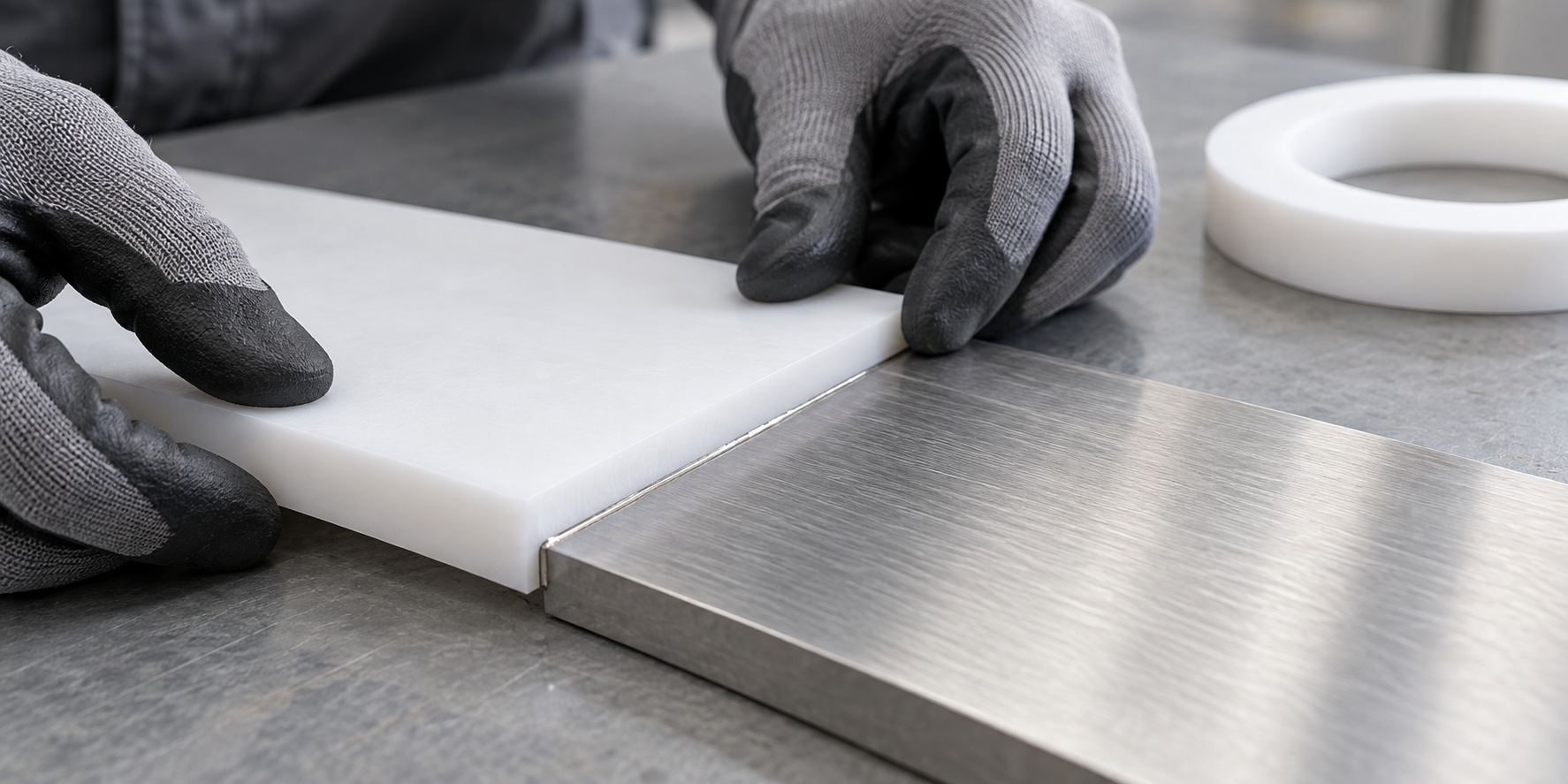
Why is PTFE difficult to bond?
PTFE, or polytetrafluoroethylene, has very low surface energy. Many adhesives struggle to wet and adhere to its surface, even when the material looks clean.
Understanding how to bond PTFE starts with choosing a system designed for this challenge. Simply sanding it is not a reliable solution: Permabond reports that abrasion, flame, corona and plasma treatment provide virtually no improvement in PTFE adhesion. Specialist chemical etching is another route, but requires suitable handling and process controls.
When to use a two-part acrylic
For larger assemblies or joints requiring structural performance, start by evaluating a specialist acrylic. Permabond recommends its TA46XX range for untreated PTFE, without POP primer.
These products also allow more positioning time than fast-setting superglues. However, a structural adhesive still needs a suitable joint design and testing on the actual materials.
Permabond TA4610: controlled bond thickness
TA4610 is a toughened, two-part acrylic containing microparticles that help control the bond gap. Its maximum gap fill is 1 mm, and its typical pot life is 5–8 minutes at 23°C.
It is a useful candidate for PTFE components bonded to metal or other compatible materials where a controlled adhesive layer is possible. Allow approximately 24–36 hours for full cure.
Permabond TA4611: smaller gaps
Buy Permabond TA4611 25 ml or 50 ml.
TA4611 is similar to TA4610 but contains no microbeads, making it better suited to tighter-fitting joints. Its maximum gap fill is 0.5 mm, with a typical pot life of 4–6 minutes at 23°C.
If you are deciding how to bond PTFE within a small clearance, TA4611 is worth evaluating. Full cure typically takes 24–36 hours.
When to use superglue with POP primer
For small components and close-fitting joints where rapid assembly matters, a cyanoacrylate system can be practical. POP primer is applied separately to the PTFE before bonding; it is not mixed into the glue.
Knowing how to bond PTFE with superglue means treating the primer as an essential part of the process. Do not assume an ordinary cyanoacrylate will adhere reliably to untreated PTFE.
Permabond 2050 with POP
Buy Permabond 2050 20 g and POP primer 50 ml.
2050 is a colourless, flexible, toughened cyanoacrylate with improved peel, impact and vibration resistance compared with conventional grades. Its maximum gap fill is 0.2 mm.
Consider it for close-fitting joints where some movement is expected. A flexible grade does not automatically make a bonded belt or repeatedly bending assembly suitable; test the finished joint under realistic flexing.
Permabond 737 with POP
Buy Permabond 737 20 g with POP primer.
737 is a black, toughened cyanoacrylate with improved impact and peel resistance. Its maximum gap fill is 0.5 mm. Consider it when a dark bond line is acceptable and the joint needs greater gap allowance than 2050.
Product comparison
| Product | Type | POP on PTFE? | Maximum gap | Main selection reason |
|---|---|---|---|---|
| TA4610 | Two-part acrylic | No | 1 mm | Controlled bond thickness |
| TA4611 | Two-part acrylic | No | 0.5 mm | Tighter acrylic joints |
| 2050 | Cyanoacrylate | Yes | 0.2 mm | Colourless, flexible grade |
| 737 | Cyanoacrylate | Yes | 0.5 mm | Black, toughened grade |
These are data-sheet gap limits, not guarantees of PTFE performance at the maximum gap.
| Application priority | Starting point to trial |
|---|---|
| Larger assembly or structural joint | TA4610 or TA4611 |
| Tight clearance without primer | TA4611 |
| Small, close-fitting, fast assembly | 2050 + POP |
| Dark bond line and more gap allowance | 737 + POP |
How to bond PTFE: preparation and application
- Check fit and clean both surfaces using a compatible cleaner. Allow them to dry.
- For TA4610 or TA4611, dispense correctly mixed adhesive through the appropriate static mixer, assemble within the pot life and support until handling strength develops.
- For cyanoacrylates, apply a thin coating of POP to the PTFE with a clean cloth or brush.
- Let POP dry completely—typically around 30 seconds at 23°C—then bond immediately.
- Apply a small amount of cyanoacrylate to one surface, assemble promptly and hold securely. Allow 24 hours before full-strength testing.
Only prime the other material if it also needs POP.
Choosing for the real application
When assessing how to bond PTFE, check temperature, chemical exposure, moisture, peel forces and repeated movement. PTFE’s own resistance does not establish the adhesive’s resistance.
For further information, read Permabond’s PTFE bonding guide, our metal-to-plastic adhesive guide and our silicone bonding guide.
Need help choosing? Contact Adsupply with the mating material, gap and operating conditions so we can advise on a suitable product to trial.