
Fibreglass (GRP) is widely used in marine, automotive, construction and leisure applications thanks to its strength, corrosion resistance and low weight. However, many projects require bonding fibreglass to plastic, whether repairing a caravan panel, fixing a boat component, attaching trims, or assembling composite structures.
While many adhesives claim to bond almost anything, successfully bonding fibreglass to plastic depends heavily on the type of plastic involved. Some plastics bond easily, while others are known as low surface energy materials and can be extremely difficult to adhere to without specialist preparation.
In this guide, we explain the challenges of bonding fibreglass to plastic, compare adhesive technologies, identify difficult-to-bond plastics, and recommend suitable products available from Adhesive Supply Company.
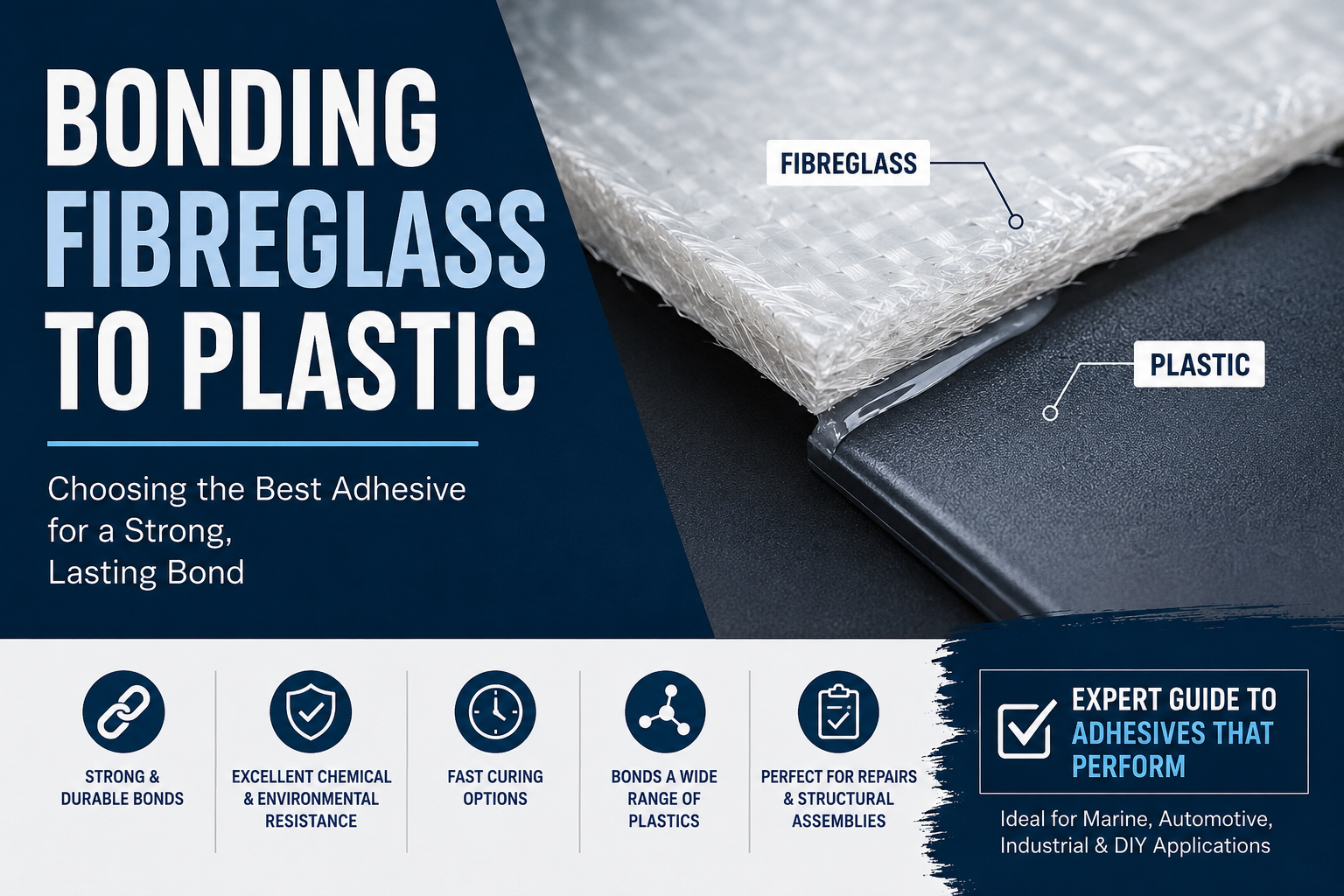
Why Bonding Fibreglass to Plastic Can Be Challenging
Fibreglass typically presents a relatively high-energy surface which adhesives can grip effectively once cleaned and abraded. Plastic is often the limiting factor.
Many plastics contain mould-release agents, additives or naturally low surface energy surfaces that prevent adhesives from properly wetting out and forming a strong bond.
The success of bonding fibreglass to plastic therefore depends on:
- Plastic type
- Surface preparation
- Environmental exposure
- Required flexibility
- Gap size
- Load requirements
Common Plastics Used with Fibreglass
| Plastic Type | Ease of Bond | General Properties | Typical Applications |
|---|---|---|---|
| ABS | Excellent | Tough, rigid, impact-resistant engineering plastic | Caravan panels, housings |
| PVC | Good | Durable, chemical-resistant, available in rigid or flexible grades | Pipework, trims, profiles |
| Polycarbonate | Good | Transparent, extremely impact-resistant, high strength | Glazing, covers |
| Acrylic (PMMA) | Good | Clear, rigid, excellent optical clarity | Displays, windows |
| Nylon | Moderate | Tough, wear-resistant, absorbs some moisture | Engineering components |
| Polypropylene (PP) | Difficult | Lightweight, chemically resistant, low surface energy | Automotive trims |
| Polyethylene (PE) | Difficult | Flexible, chemically resistant, waxy low-energy surface | Tanks, containers |
| PTFE | Extremely Difficult | Ultra-low friction, non-stick surface, exceptional chemical resistance | Specialist applications |
When bonding fibreglass to plastic, ABS, PVC and polycarbonate are generally straightforward. Polypropylene and polyethylene require additional consideration due to their low surface energy characteristics.
What Are Low Surface Energy Plastics?
Low surface energy (LSE) plastics resist adhesive wetting and are naturally difficult to bond.
Examples include:
- Polypropylene (PP)
- Polyethylene (PE)
- HDPE
- LDPE
- PTFE
Traditional epoxies and acrylics often struggle to achieve reliable adhesion to these materials without specialist primers, flame treatment, corona treatment or mechanical fastening.
If you are bonding fibreglass to plastic and the plastic is polypropylene or polyethylene, it is important to identify this before selecting an adhesive.
Recommended Adhesives for Bonding Fibreglass to Plastic
Permabond TA4204 Clear Acrylic
Suitable for:
- Fibreglass to ABS
- Fibreglass to PVC
- Fibreglass to polycarbonate
- Fibreglass to acrylic
- General GRP-to-plastic assemblies
Benefits:
- Crystal-clear bond line
- Fast fixture time
- Excellent impact resistance
- Good environmental durability
- Strong adhesion to a wide range of engineering plastics
Typical Fixture Time:
- Approximately 3-5 minutes
Full Cure:
- Approximately 24 hours
When to Use TA4204:
Permabond TA4204 is an excellent choice for general-purpose fibreglass-to-plastic bonding where a fast-setting structural adhesive is required. It performs particularly well on ABS, PVC, acrylic and polycarbonate components commonly found in caravans, vehicles, marine equipment and composite assemblies.
Its lower viscosity also makes it suitable for close-fitting parts where good wetting of the surfaces is important.
When Not to Use TA4204:
TA4204 may not be the best option where larger bond gaps exist or where the joint will be subjected to continuous vibration, shock loading or repeated movement. In these situations, TA4205 may provide improved long-term durability.
Buy here: Permabond 50ml Acrylic Clear Adhesive
Permabond TA4205 Clear Acrylic
Benefits:
- Crystal-clear bond line
- Toughened acrylic technology
- Excellent peel resistance
- Superior gap-filling capability
- Outstanding resistance to vibration and fatigue
Typical Fixture Time:
- Approximately 5-7 minutes
Full Cure:
- Approximately 24 hours
When to Use TA4205:
Permabond TA4205 is generally the preferred choice for more demanding fibreglass-to-plastic applications. The tougher formulation offers improved resistance to vibration, movement and impact, making it particularly suitable for caravans, motorhomes, boats, vehicle bodywork and other assemblies exposed to dynamic loads.
TA4205 is also often selected where surfaces are less than perfect and additional gap-filling capability is beneficial.
When Not to Use TA4205:
TA4205 is typically unnecessary for smaller, close-fitting assemblies where maximum toughness is not required. In these cases, TA4204 can provide excellent performance with a slightly faster fixture time.
Buy here: Permabond TA4205 Acrylic Adhesive
Plexus MA300 Off-White
Suitable for:
- Fibreglass to ABS
- Fibreglass to PVC
- Fibreglass to composite plastics
- Fibreglass to aluminium
- Fibreglass to steel
- General-purpose structural composite bonding
Benefits:
- High structural strength
- Excellent fatigue resistance
- Fast cure time
- Proven performance in marine applications
- Excellent adhesion to GRP and many engineering plastics
Typical Working Time:
- Approximately 3-6 minutes
Fixture Time:
- Approximately 15-18 minutes
Full Cure:
- Approximately 24 hours
When to Use MA300:
Plexus MA300 is an excellent choice when fast strength development is required. It is widely used for bonding fibreglass panels, caravan bodywork, vehicle components, marine structures and composite assemblies where parts need to be handled or moved quickly after bonding.
Its rapid cure speed makes it particularly useful for production environments, repair work and applications where downtime needs to be minimised.
When Not to Use MA300:
MA300 may not be the best choice for larger assemblies where additional positioning time is needed. Once mixed, the adhesive begins curing quickly, leaving less time for alignment and adjustment.
Buy here: Plexus MA300 50ml
Plexus MA310 Off-White
Suitable for:
- Fibreglass to ABS
- Fibreglass to PVC
- Fibreglass to polycarbonate
- Fibreglass to acrylic
- Fibreglass to many engineering plastics
- Larger composite assemblies
- Marine, transport and industrial applications
Benefits:
- Longer working time
- High structural strength
- Excellent impact and fatigue resistance
- Greater assembly flexibility
- Bonds a wider range of plastics than MA300
Typical Working Time:
- Approximately 15-18 minutes
Fixture Time:
- Approximately 35-40 minutes
Full Cure:
- Approximately 24 hours
When to Use MA310:
Plexus MA310 is often preferred when bonding larger components or more complex assemblies where additional positioning time is beneficial. The longer open time allows operators to accurately align parts before the adhesive begins to set.
MA310 is also commonly selected when bonding a broader range of plastics, making it a versatile choice for caravan manufacture, vehicle body construction, marine applications and composite fabrication.
When Not to Use MA310:
MA310 may be unnecessary for smaller repairs or production environments where rapid handling strength is the priority. In these situations, MA300 will often achieve the same bond performance while significantly reducing waiting times.
Buy Here: Plexus MA310 50ml
Permabond TA4610 Off-White
Suitable for:
- Fibreglass to ABS
- Fibreglass to polycarbonate
- Fibreglass to acrylic
- Fibreglass to metals
- Industrial composite assemblies
Benefits:
- Toughened two part acrylic adhesive
- Excellent chemical resistance
- High shear strength
- Good environmental durability
- Suitable for elevated service temperatures
- Capable of bonding a wider range of plastics than many conventional epoxies, including some difficult-to-bond engineering plastics like PE/PP
Typical Working Time:
- Approximately 8-12 minutes
Fixture Time:
- Approximately 2-3 hours
Full Cure:
- Approximately 24 hours
When to Use TA4610:
TA4610 is often selected when chemical resistance, temperature resistance or long-term durability are more important than cure speed. It is well suited to industrial equipment, vehicle components, GRP housings and assemblies exposed to oils, fuels or cleaning chemicals.
When Not to Use TA4610:
TA4610 is generally not the best choice where rapid handling strength is required. Acrylic adhesives such as TA4204, TA4205, MA300 or MA310 will typically provide much faster fixture times.
Buy Here: Permabond TA4610 50ml
Permabond TA4611
Suitable for:
- Fibreglass to engineering plastics
- Fibreglass to metals
- Composite panel bonding
- Marine and transport applications
Benefits:
- Toughened two part acrylic adhesive
- Excellent fatigue resistance
- High peel strength
- Superior environmental resistance
- Extended working time
- Capable of bonding a wider range of plastics than many conventional epoxies, including some difficult-to-bond engineering plastics like PP/PE
Typical Working Time:
- Approximately 20-30 minutes
Fixture Time:
- Approximately 4-6 hours
Full Cure:
- Approximately 24 hours
When to Use TA4611:
TA4611 is often preferred for larger assemblies where additional positioning time is required. The longer working time allows more flexibility during assembly while still delivering the strength and durability associated with structural epoxy adhesives.
When Not to Use TA4611:
TA4611 may be unnecessary for smaller repairs where a rapid cure is preferred. Faster acrylic adhesives are often more practical for day-to-day repair work.
Buy Here:
https://www.adsupply.co.uk/product/permabond-ta4611/
Permabond ET5428 Black or Off-White
Suitable for:
- Fibreglass to polycarbonate
- Fibreglass to acrylic
- Fibreglass to ABS
- Fibreglass to metal
- High-performance composite assemblies
Benefits:
- Excellent chemical resistance
- High temperature performance
- Exceptional environmental durability
- Excellent long-term bond stability
- Strong adhesion to a wide range of substrates
Typical Working Time:
- Approximately 45-60 minutes
Fixture Time:
- Approximately 6-8 hours
Full Cure:
- Approximately 24 hours
When to Use ET5428:
ET5428 is typically selected when maximum durability is required. It is particularly suitable for demanding marine, industrial and transport applications where the bond may be exposed to chemicals, moisture, temperature fluctuations or long-term outdoor service.
When Not to Use ET5428:
ET5428 is not usually the first choice for fast repairs due to its longer cure profile. Where rapid assembly or quick handling strength is required, MA300, MA310, TA4204 or TA4205 are often better options. ET5428 is strong but slightly more rigid than MMA/acrylics.
Buy Here: Permabond ET5428 50ml
Adhesive Comparison Chart
| Adhesive | ABS | PVC | Polycarbonate | Acrylic | PP/PE* |
|---|---|---|---|---|---|
| Permabond TA4204 | Excellent | Excellent | Good | Good | Poor |
| Permabond TA4205 | Excellent | Excellent | Good | Good | Poor |
| Plexus MA300 | Excellent | Excellent | Good | Good | Poor |
| Plexus MA310 | Excellent | Excellent | Excellent | Excellent | Fair |
| Permabond TA4610 | Excellent | Good | Excellent | Excellent | Good |
| Permabond TA4611 | Excellent | Good | Excellent | Excellent | Good |
| Permabond ET5428 | Good | Good | Excellent | Excellent | Poor-Fair |
When to Use Bonding Fibreglass to Plastic Adhesives
Adhesive bonding is often ideal when:
- Drilling holes would weaken components
- A watertight seal is required
- Vibration resistance is important
- Dissimilar materials need joining
- A clean appearance is desired
Typical applications include:
- Caravan body repairs
- Boat component assembly
- Vehicle body modifications
- GRP enclosures
- Equipment housings
- Plastic trim attachment
When Not to Use Adhesive Bonding
Adhesives may not be the best option when:
- Bonding directly to untreated PP or PE
- Surfaces are heavily contaminated
- Components are constantly submerged without selecting a suitable marine-grade adhesive
- Excessive movement exceeds adhesive flexibility limits
- The substrate itself is damaged or degraded
Where low surface energy plastics are involved, specialist surface treatment or alternative joining methods may be required.
Surface Preparation Tips
Successful bonding fibreglass to plastic relies heavily on preparation.
For best results:
- Clean both surfaces thoroughly.
- Remove grease, mould-release agents and contaminants.
- Lightly abrade the fibreglass surface.
- Abrade suitable plastics where possible.
- Remove dust before adhesive application.
- Follow manufacturer cure recommendations.
Poor surface preparation is one of the most common causes of bond failure.
Related Adhesive Guides
If you are working with plastics in other applications, you may also find these guides useful:
- Plastic to Plastic Bonding Guide
- Plastic to Metal Bonding Guide
- Fibreglass to Metal Bonding Guide
- Boat Repair Adhesive Guide
Further Reading
For additional information on plastic material properties and adhesion characteristics, the British Plastics Federation provides useful technical guidance:
Conclusion
Successful bonding fibreglass to plastic depends on understanding both materials and selecting the correct adhesive system. ABS, PVC, polycarbonate and acrylic can typically be bonded successfully using structural acrylics or epoxies such as Permabond TA4204, Permabond TA4205, Plexus MA300 and Permabond ET5428.
When dealing with polypropylene, polyethylene or other low surface energy plastics, additional preparation or specialist solutions may be necessary.
By identifying the plastic correctly and using a suitable adhesive, bonding fibreglass to plastic can provide a strong, durable and long-lasting joint for marine, automotive, construction and industrial applications.