

Description
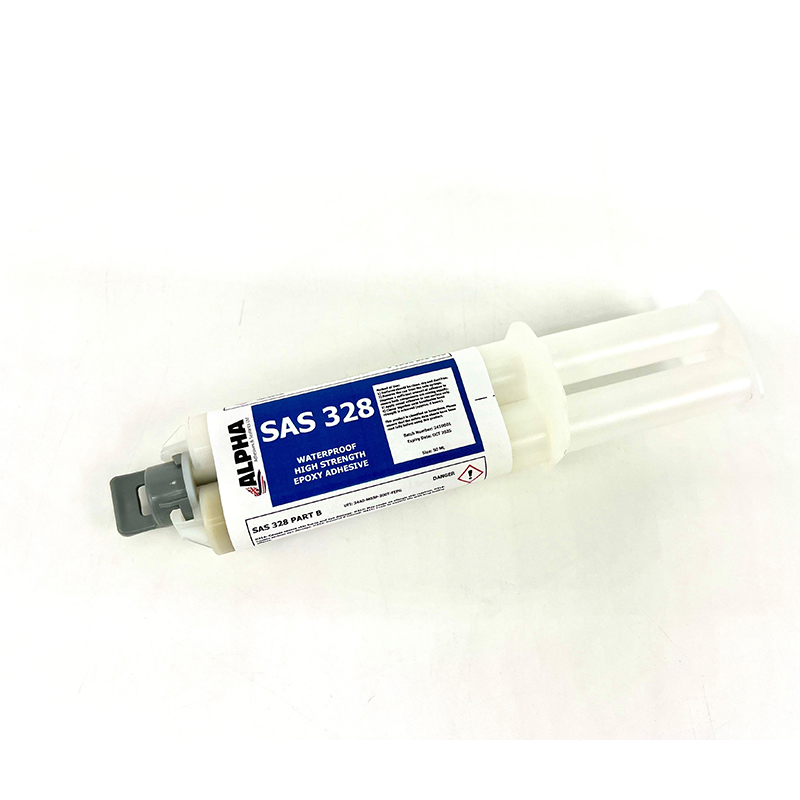
Alpha SAS328 is a two-part, high-strength underwater epoxy adhesive developed for structural bonding and repairs in wet, damp and water-immersed conditions. It provides excellent adhesion to concrete, stone, brick, wood, steel, fibreglass, tiles, ABS and rigid PVC.
Supplied in a convenient 25ml twin syringe, SAS328 mixes at a simple 1:1 ratio and produces a slump-resistant epoxy paste capable of filling gaps up to 5mm.
Key benefits
- Can be applied in wet, damp and underwater conditions
- Bonds concrete, metal, wood, brick, stone and fibreglass
- Suitable for ABS, rigid PVC and tiles
- High mechanical and impact strength
- Waterproof after curing
- Slump-resistant paste consistency
- Fills gaps up to 5mm
- Long 45–60 minute working time
- Handling strength in approximately six hours
- Full cure in approximately 24 hours
- 100% solid content
- Convenient 25ml twin syringe
- No separate dispensing gun required
What does Alpha SAS328 bond?
Alpha SAS328 underwater epoxy adhesive is suitable for bonding:
- Concrete
- Stone and masonry
- Brick
- Mild steel and other suitable metals
- Wood
- Fibreglass and GRP
- Ceramic tiles
- ABS
- Rigid PVC
Always test unfamiliar plastics, coatings and composite surfaces before completing the full application.
Typical applications
Alpha SAS328 can be used for:
- Wet and damp structural repairs
- Marine maintenance
- Boat and GRP repairs
- Bonding steel to concrete
- Concrete, brick and masonry repairs
- Sealing underground conduits
- Automotive and transportation assembly
- Shower repairs
- Refrigerator repairs
- Bonding fibreglass, wood and tile
- General industrial maintenance
Professional underwater placement should only be undertaken by suitably certified and experienced diving contractors.
Technical information
| Property | Specification |
|---|---|
| Product type | Two-part toughened epoxy adhesive |
| Mixed colour | Beige |
| Part A colour | White |
| Part B colour | Light brown |
| Mixing ratio | 1:1 |
| Mixed consistency | Thixotropic, slump-resistant paste |
| Solids content | 100% |
| Working time at 20°C | Approximately 45–60 minutes |
| Handling strength at 20°C | Approximately 6 hours |
| Full cure at 20°C | Approximately 24 hours |
| Gap filling | Up to 5mm |
| Mild-steel shear strength | Approximately 14N/mm² |
| Underwater application temperature | 4°C to 35°C |
| Pack size | 25ml twin syringe |
| Shelf life | Up to 24 months |
The stated results are typical manufacturer figures and should not be treated as specification limits. Cure speed and performance will vary with temperature, joint design, surface preparation and the materials being bonded.
How to use Alpha SAS328
1. Prepare the surfaces
Remove dirt, grease, oil, wax, rust, paint, loose coatings, algae and marine growth. Roughening smooth surfaces will normally improve mechanical adhesion.
Concrete should be properly cured and structurally sound. Alpha recommends concrete is cured for at least 28 days and has a minimum compressive strength of 25MPa.
2. Dispense equal quantities
Remove the syringe cap and dispense equal quantities of Part A and Part B.
3. Mix thoroughly
Mix the two components until a completely uniform beige colour is produced. Incomplete mixing may prevent the adhesive from curing correctly.
4. Apply the adhesive
Apply the mixed epoxy to one of the prepared surfaces. Assemble the parts in their required final position within the 45–60 minute working time.
5. Secure the assembly
Clamp, support or otherwise secure the components for approximately six hours at room temperature while handling strength develops.
6. Allow to cure
Full cure is achieved in approximately 24 hours at 20°C. Lower temperatures may increase the curing time.
Underwater application
SAS328 can be applied in damp and underwater conditions. Water temperature must be between 4°C and 35°C.
Underwater placement presents additional safety and application challenges and should only be attempted by certified and experienced diving contractors. Remove algae, marine growth and loose contamination before applying the adhesive.
Chemical resistance
Once correctly cured, SAS328 offers resistance to:
- Water
- Dilute acids
- Dilute alkalis
- Hydrocarbon solvents
- Many chemicals encountered in general industrial service
Suitability for continuous exposure to a particular chemical should be confirmed before use.
Important information
- Mix Part A and Part B in equal proportions.
- Do not apply underwater below 4°C or above 35°C.
- Secure bonded components until handling strength develops.
- Remove uncured adhesive using a suitable cleaner.
- Fully cured material must normally be removed mechanically.
- Do not use on an unfamiliar plastic or coating without testing.
- This product is classified as hazardous; consult the Safety Data Sheet before use.
- Wear suitable gloves and eye protection.
- Suitability for potable water, aquariums or direct food contact is not stated and should not be assumed.
Frequently asked questions
Can SAS328 be applied underwater?
Yes. It is specifically designed for wet, damp and underwater application. Underwater placement should only be performed by certified and experienced diving contractors.
Is it suitable for repairing concrete?
Yes. SAS328 bonds to suitably prepared concrete, stone, brick and masonry. Concrete should be fully cured and structurally sound before application.
Can it bond metal to concrete?
Yes. Steel-to-concrete structural bonding is a stated application, provided both surfaces are correctly prepared.
Will it bond fibreglass?
Yes. Alpha lists fibreglass as a suitable substrate, making SAS328 useful for appropriate GRP and marine repairs.
Does it bond plastic?
It is suitable for some plastics, including ABS and rigid PVC. It is not described as suitable for flexible PVC, polypropylene or polyethylene.
How long does it take to cure?
At approximately 20°C, working time is 45–60 minutes, handling strength develops after around six hours and full cure is achieved after approximately 24 hours.
How large a gap can it fill?
Its slump-resistant consistency enables it to fill gaps up to approximately 5mm.
What colour does it cure?
Once the white resin and light-brown hardener are properly mixed, the adhesive is beige.


Reviews
There are no reviews yet.